
Your cart (0)
Your cart is empty
Tax included and shipping calculated at checkout
Your cart is empty
Tax included and shipping calculated at checkout

Looking for a travel trailer that can handle both Interstate 70 and a BLM dirt road in Utah? Black Series travel trailers are purpose-built for overlanding across America's toughest terrain, combining highway-friendly towing with the reinforced chassis and independent suspension you need when the pavement ends. Whether you're running a 16 ft camper weight setup behind a mid-size truck or hauling a 30-foot camper weight beast with a heavy-duty pickup, these trailers are engineered to go where standard RVs can't.
A travel trailer traditionally means "campground comfort on wheels," designed for paved roads and level RV parks. But a Black Series travel trailer flips that script. We build trailers that combine the average weight of camper expectations with military-grade construction, so you can tow your fully-equipped living quarters deep into the backcountry without worrying about the frame cracking or the walls falling apart.

The difference comes down to engineering. Standard RVs use stick-and-tin construction with leaf spring suspensions, fine for smooth highways, but not built for washboard roads or rocky two-tracks. Black Series trailers feature hot-dip galvanized steel chassis, independent dual-shock suspension systems, and composite body panels that resist UV degradation and impact damage. That means you're not choosing between comfort and capability, you get both.
Our lineup includes five core models, ranging from the compact HQ12 (perfect for couples with mid-size trucks) to the expansive HQ21 (built for full-time overlanders who need maximum space and luxury). Each model is fully street-legal and DOT-compliant across all 50 states, so you can confidently cross state lines without compliance headaches.
Picking the right trailer isn't just about floor plans and interior color schemes. You need to match the average travel trailer weights to your truck's actual off-road towing capacity, not just what the manufacturer says it can tow on flat pavement.
Let's talk numbers. A 16 ft camper weight in our lineup typically falls between 2,800–3,200 lbs dry weight, making it ideal for mid-size pickups like the Toyota Tacoma, Ford Ranger, or Jeep Gladiator. Move up to an 18 ft camper weight model (around 3,500–4,000 lbs), and you'll want at least a half-ton truck like the F-150 or Ram 1500.
When you hit the 24 ft camper weight range (5,000–6,500 lbs) or the 30 ft RV weight category (7,000+ lbs), you're looking at 2500-series trucks or heavier. Remember: off-road grades and uneven terrain demand more from your engine, transmission, and brakes than highway cruising. That extra torque isn't just for show, it's survival when you're climbing a 12% grade on loose gravel.
Standard travel trailers use leaf springs because they're cheap and easy to manufacture. We use independent suspension with dual-shock setups and trailing arms because it actually works. This system allows each wheel to articulate independently over rocks, logs, and ruts, keeping your trailer level and your dishes intact.
Looking for travel trailers with off-road suspension? That's our entire product line. The independent system also reduces frame stress, which means fewer cracks, leaks, and warranty claims down the road.
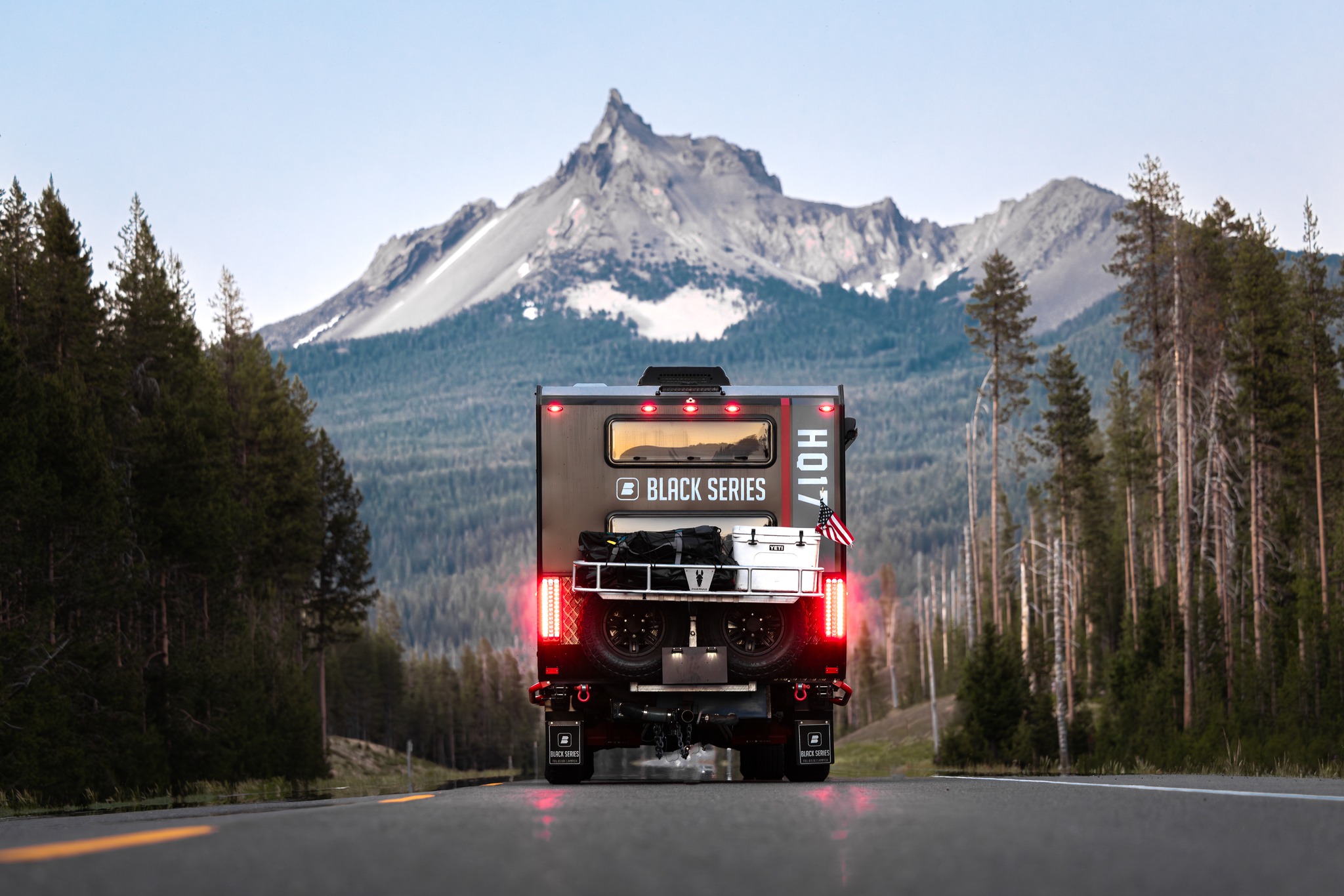
All Black Series trailers are fully street-legal and DOT-compliant. You can tow them across all 50 states without worrying about width restrictions, lighting requirements, or registration issues. This matters more than you think, some custom-built or imported overlanding rigs run into serious problems at state inspection stations.
We start with a hot-dipped galvanized steel chassis using box section construction. Box sections provide superior torsional rigidity compared to C-channel designs, which means your frame won't twist and crack when one wheel drops into a hole. The galvanization process protects against rust from road salt, sand, and moisture, critical when you're camping near the ocean or driving through snowy mountain passes.
Our welding team uses military-spec techniques, not the spot-welds you'll find on budget trailers. Every joint is reinforced, every stress point is calculated. This is why our trailers can handle decades of abuse instead of falling apart after three seasons.
Overlanding means no power poles. That's why every Black Series trailer comes standard with roof-mounted solar panels and high-capacity lithium batteries. You're looking at 200–400 watts of solar depending on the model, paired with 100–200 amp-hour lithium systems that power your fridge, lights, water pump, and charging stations without firing up a generator.
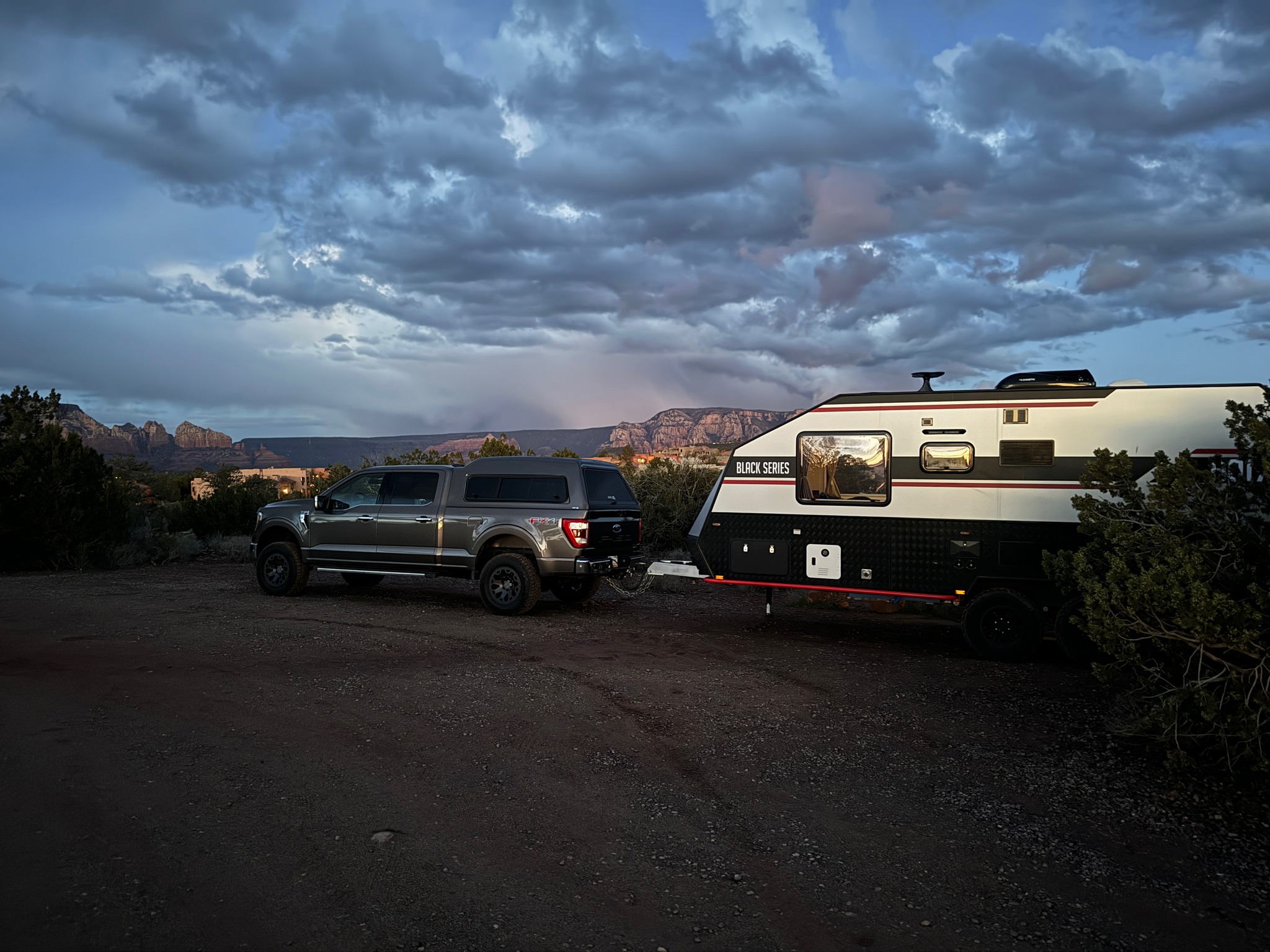
The control systems use touchscreen panels that let you monitor battery levels, water tank capacity, and solar input in real time. No more guessing if you have enough juice to run the AC overnight.
Black Series trailers aren't about "roughing it." You get full kitchens with stainless steel sinks, propane stoves, and large fridges. Bathroom options range from compact wet baths (shower and toilet in one space-saving unit) to full dry bathrooms with separate shower stalls. Sleeping quarters include memory foam mattresses, convertible dinettes, and in larger models like the HQ19 and HQ21, dedicated bedroom spaces.
Four-season insulation keeps you comfortable whether you're camping in Arizona's 110°F summer heat or Wyoming's -20°F winter cold. Efficient diesel or propane heaters maintain interior temps without draining your battery bank.
Black Series trailers shine on long-haul trips. The aerodynamic profiles and highway-stable suspensions mean you can comfortably cruise at 65 mph on Interstate 80 for hundreds of miles, then drop onto a forest service road without switching vehicles or trailers. That's the point, versatility.
Whether you're navigating the tight switchbacks into Yellowstone or setting up on a remote patch of Nevada BLM land, these trailers fit the bill. The compact models (HQ12–HQ15) squeeze into spots that larger Class A motorhomes can't access. The larger models (HQ19–HQ21) give you the space and amenities for extended stays without needing to drive into town for supplies every three days.
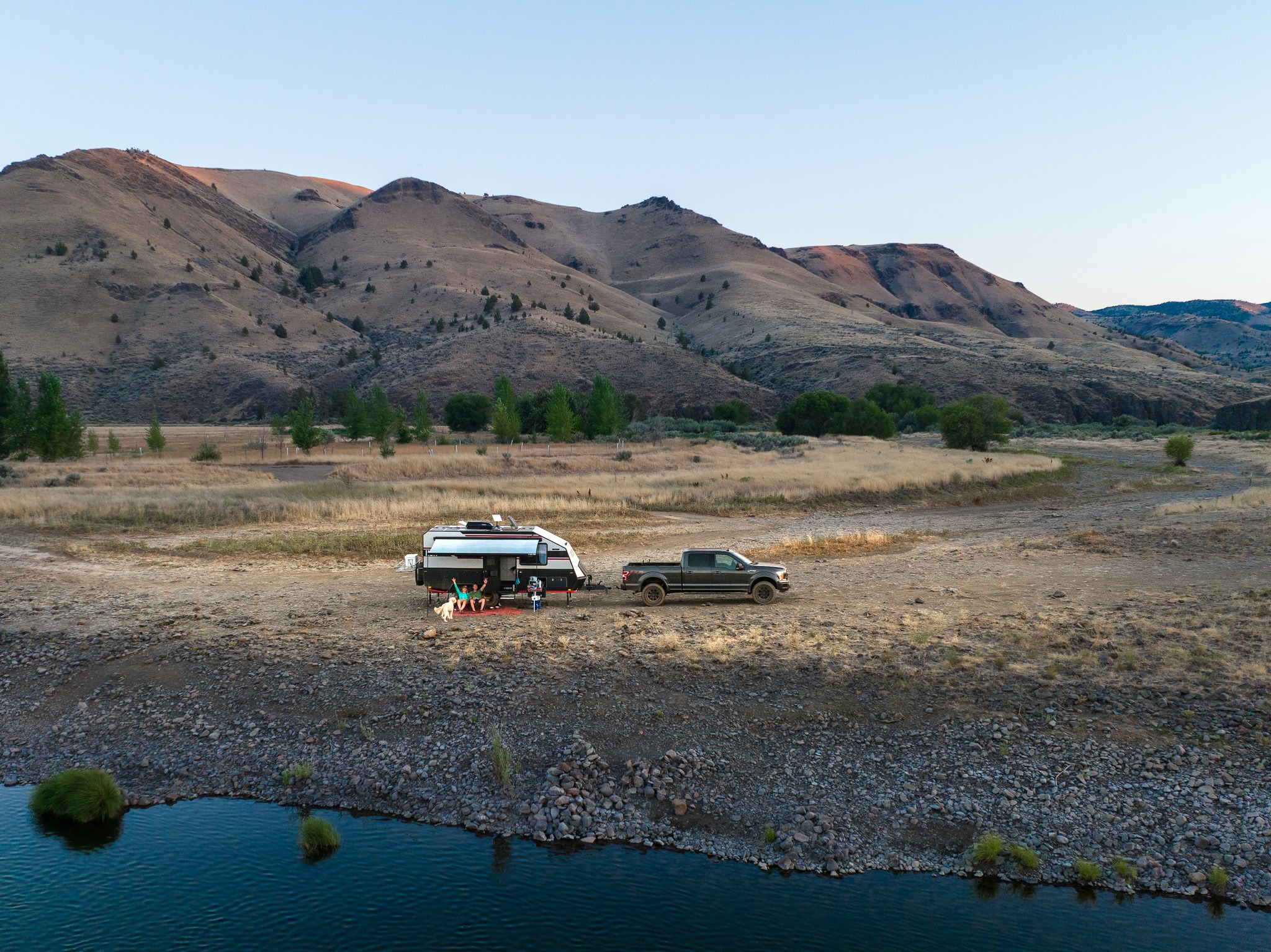
The sweet spot for most Black Series owners: 50% highway, 50% dirt. You're not rock-crawling through Moab every weekend, but you're also not staying in paved RV parks. You want to access that hidden fishing spot, that secluded trailhead, that perfect overlook where no one else camps. That's exactly where these trailers excel.
Here's the truth: Black Series trailers are heavier than their "stick-and-tin" counterparts. A 30-foot camper weight in our lineup reflects the reinforced steel frame, composite armor, and heavy-duty axles underneath. You're not getting a flimsy box that weighs 4,000 lbs but falls apart after one season, you're getting a 7,500 lb fortress that lasts decades.
Buyers who prioritize durability over the "lightweight" marketing trend consistently choose us. They understand that shaving 1,000 lbs off the weight doesn't matter if the trailer can't handle a single rough road without developing leaks and cracks.
Because we use standardized components and military-grade construction, maintenance is straightforward. You're not hunting down proprietary parts or dealing with custom fabrication every time something breaks. The modular design also means you can upgrade your electrical system, add auxiliary water tanks, or install additional solar panels without major modifications.
Let's be clear about limitations. If you're exclusively staying in paved RV parks with full hookups, you're overpaying for features you won't use. If you want the absolute lightest trailer for a compact SUV, you'll need to look elsewhere. Black Series trailers are purpose-built for overlanding, if that's not your use case, there are cheaper options.
Learn more about living the full-time RV lifestyle to see if overlanding is right for you.
Are Black Series travel trailers street legal in the USA?
Yes, absolutely. All models are fully DOT-compliant and legal to tow in all 50 states. You won't face registration or inspection issues.
What vehicles can tow a Black Series travel trailer?
It depends on the model. An 18 ft camper weight trailer (3,500–4,000 lbs) works with most half-ton trucks. A 24 ft camper weight model (5,000–6,500 lbs) requires at least a 2500-series pickup. Check your truck's actual payload and towing capacity before selecting a model.
Are these trailers suitable for full-time overlanding?
Yes. The HQ19 and HQ21 models are specifically designed for full-time living, with large water tanks, extensive solar capacity, full bathrooms, and four-season insulation. You can comfortably live off-grid for weeks at a time.
How do Black Series travel trailers differ from standard RVs?
Construction and capability. Standard RVs use lightweight materials and leaf spring suspensions designed for paved campgrounds. Black Series uses galvanized steel chassis, independent suspension, and reinforced components built for washboard roads, rocky trails, and extreme weather. It's the difference between a minivan and a Land Cruiser.
Do I need special insurance for an off-road travel trailer?
Most standard RV insurance policies cover Black Series trailers, but confirm with your provider that off-road use is included. Some insurers require additional coverage for backcountry travel.
For detailed weight specifications and towing guidance, check out our complete travel trailer weight guide.
Ready to explore America the way it was meant to be seen? Black Series travel trailers give you the freedom to chase sunsets on dirt roads, not just campground reservation systems. Explore our full lineup and find the model that matches your adventure style.
Explore the Black Series lineup
Ready for the trail? See the Black Series off-road trailers for sale — and browse the full lineup.
Related reading:
Keep going: Can your truck tow a Black Series? Run the towing calculator · What truck can tow a Black Series? · How long can you stay off-grid? Solar & battery calculator · Black Series guides hub