
Your cart (0)
Your cart is empty
Tax included and shipping calculated at checkout
Your cart is empty
Tax included and shipping calculated at checkout

Table of Contents
RV or travel trailer living is an amazing experience, but it’s not a lifestyle choice that suits everyone.
If you’re thinking about taking the plunge but want to know more about it, this post is for you. It’s critical that you gather all the necessary information, in order to make an informed decision. Lucky for you, we’ve done the leg work for you.
In this post, you’ll discover the legalities of a full-time RV lifestyle, explore the pros and cons, find some tips on how to be a successful full-time RVer, and much more.

In the United States, it is perfectly legal to live in a travel trailer or any other type of RV and there are thousands of Americans who have chosen to do just that.
However, the answer to this question is not as simple as it first seems. A better question to ask is where is it legal to live in a travel trailer?
While there are no federal, state, or local laws that prohibit full-time travel trailer living, there are laws in place that will limit the whole experience. For example, there are regulations and laws relating to camping, sleeping in a vehicle, and parking overnight. Typically, these relate to specific locations.

More and more people are choosing to downsize and adopt a full-time RV life. Some of these people want to pursue a life of full-time adventure, traveling, and discovery. Some are looking for an inexpensive and more exciting alternative way of living.
As with most lifestyle choices, there are pros and cons.
One final benefit that’s worth mentioning is that you can take your furry friend with you wherever you go on your travels. For many RVers, this is the primary reason for living life on the road. They don’t have to leave their best buddy behind when they travel.
So, after looking on the bright side, let’s explore some of the challenges of life in a travel trailer.
There are lots of things full-time RVers can do without if you decide to adopt RV living, however, there are also some essentials that will make full-time RV living bearable and safer.
Here is a list of some items you should consider:
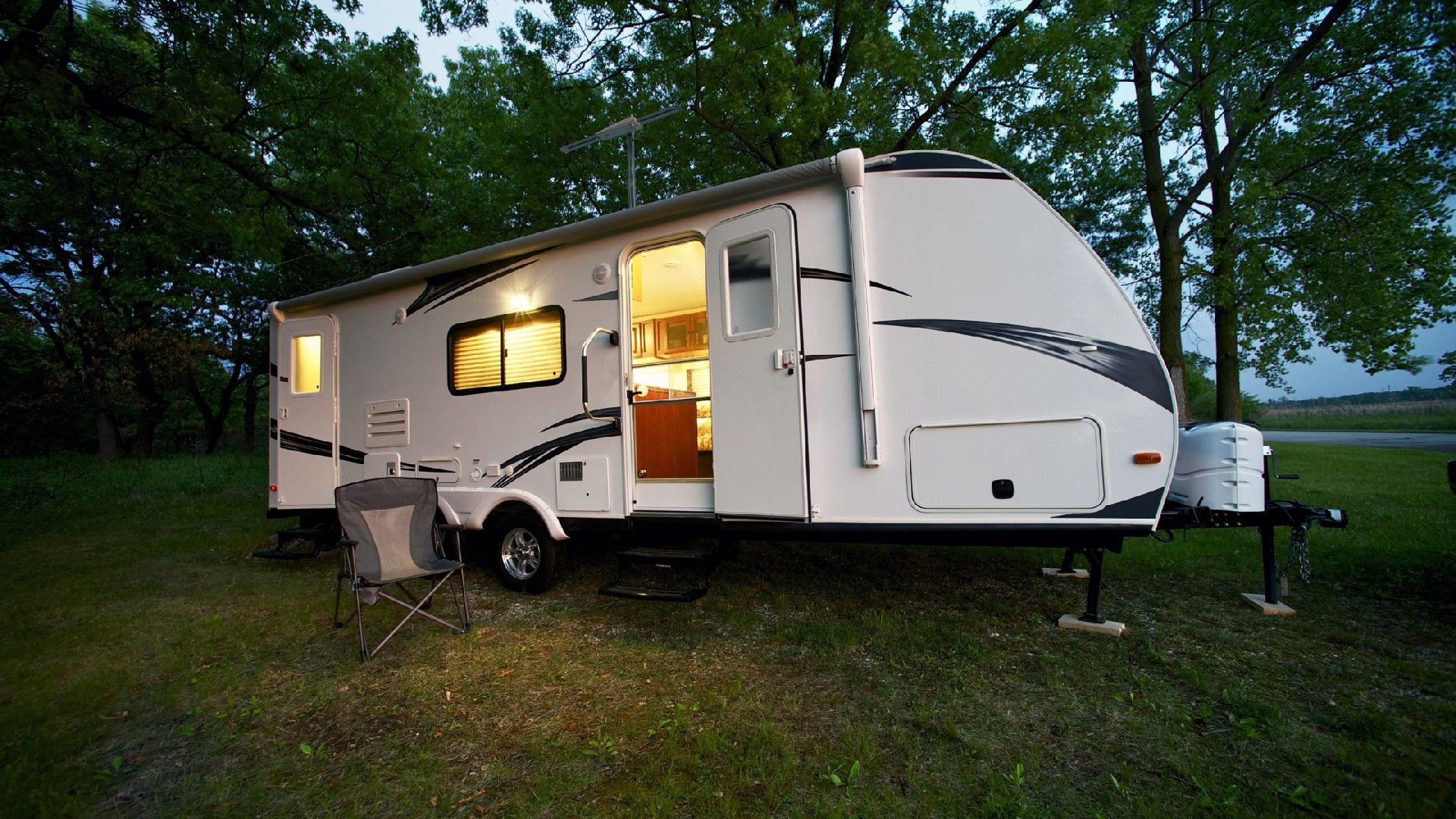
There are many things to keep in mind if you want to live in a travel trailer. Here is a list of some of the most important things to think about:
Limited water and energy is something you’ll likely have to deal with, especially if you spend most of your time off the beaten track. Camping without any hookups is usually called dry camping and sometimes boondocking. Here are some quick tips that might help if you’re dry camping.

If the news is anything to go by, you might be wondering whether it’s safe to live in a trailer. Personal safety is something you should think about and making a plan for your personal safety could make the difference between a good time and a bad one. Here are a few quick and easy tips:
There are no national zoning laws for full-time RVers, however, many cities across the US are now regulating this lifestyle choice.
Legislation is being created that dictates where you can park your travel trailer and for how long you can park. Even if you’re parking on your own property, the regulations are diverse and depend on many different factors. These factors are dictated by the city, county, and state of residence.
It’s important to know at least the basics about motorhome and travel trailer zoning laws. That being said, they do vary across the country. They can also change over time depending on a community’s changing needs.
Zoning laws vary and the consequences of violating them can also vary as well. A violation might result in you being asked to move your trailer, or it could lead to large fines, civil penalties, or even criminal proceedings and imprisonment.
If you’re planning to spend more than one night somewhere, it’s always best to do your homework. Find the local county or city zoning department and ask what you’re allowed to do.

Yes, it is possible for travel trailer living to be cheaper than living in a house. This is because RVs require less space and utility usage. The costs for maintenance, cooling, and heating also tend to be lower than a traditional house.
In addition, full-time RV living also encourages a simpler RV life and more minimalist lifestyle which can also mean fewer expenses.
A great way to save money when you’re full-time RVers is to look for free or cheap campsites.
There are thousands of free campsites managed by the United States Forest Service (USFS) and the Bureau of Land Management (BLM). You’re also likely to find free campsites near many state and national parks and other popular tourist locations.
It’s also possible to take out membership to RV programs such as Harvest Hosts, Boondockers Welcome, and Thousand Trails. There is huge potential to save thousands of dollars if you learn how to use these programs to their full potential.
When it comes down to specifics, there’s one particularly budget-friendly place you could live in your RV. Quartzsite, Arizona has plenty of full hook-up sites, some of which cost less than $300 per month during the off-season. Even during the busy seasons of January and February, monthly spots cost less than $500.
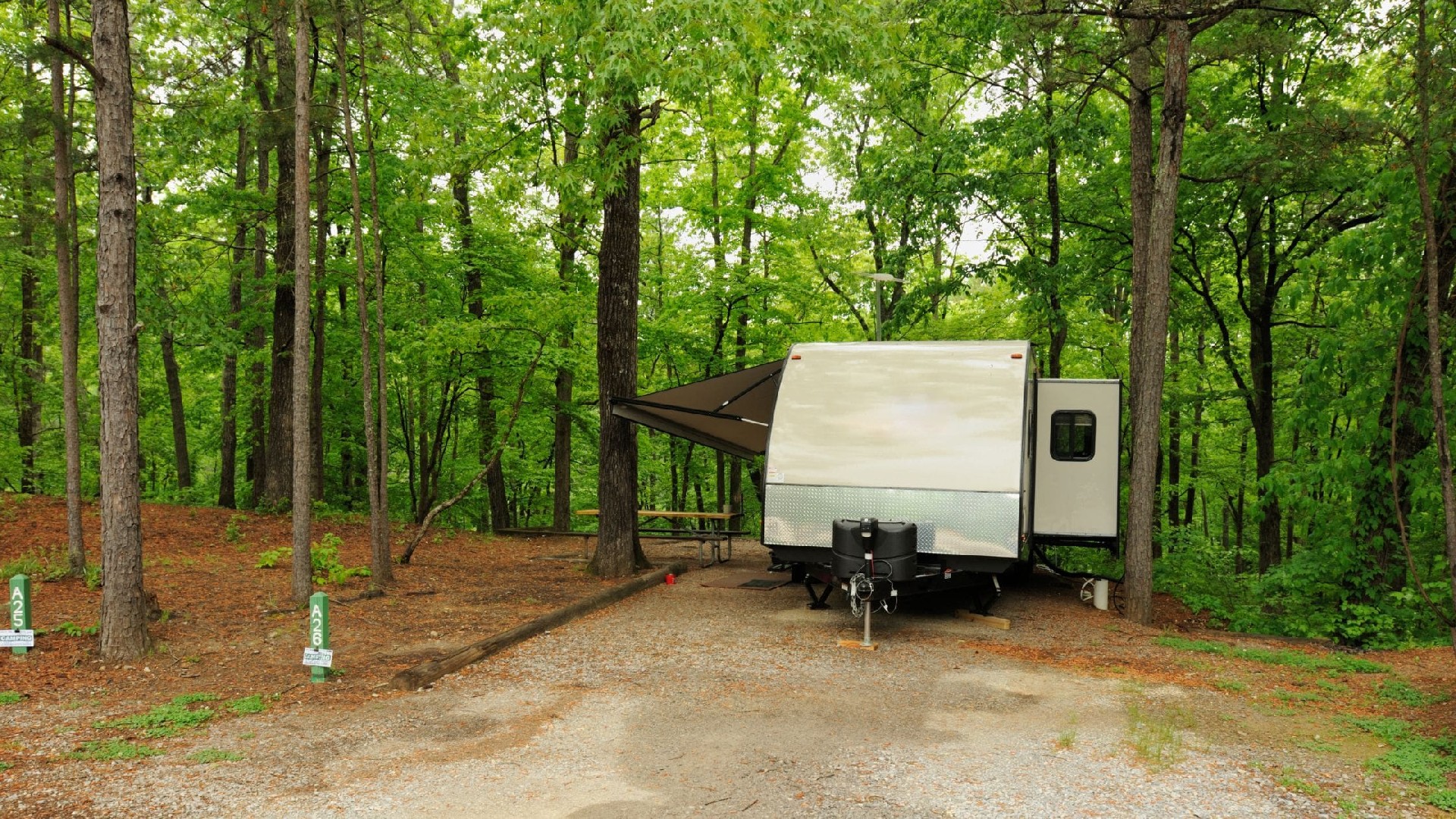
You have several options if you want to park your travel trailer long-term. They include places such as private RV parks, membership park, and some mobile home parks.
Simply call to find out whether a particular RV park offers long-term spots. Another option is to park on private land. It might be your own, a friend’s, or a family member’s piece of land. A big consideration with this option is that you can get water and electricity and dump your water waste safely. In addition, you’ll also have to make sure the city allows RVs to park on the land.
The monthly costs associated with travel trailer living vary considerably, depending on the type of trailer and your RV lifestyle. Monthly expenses are likely to include maintenance, repairs, electricity, gas, food, insurance, health insurance, phone and internet plan, and entertainment.
In terms of an average figure, you could enjoy a pleasant enough RV life for around $1,000 per month. However, depending on your needs, the cost of living in an RV could be as high as $5,000 per month.
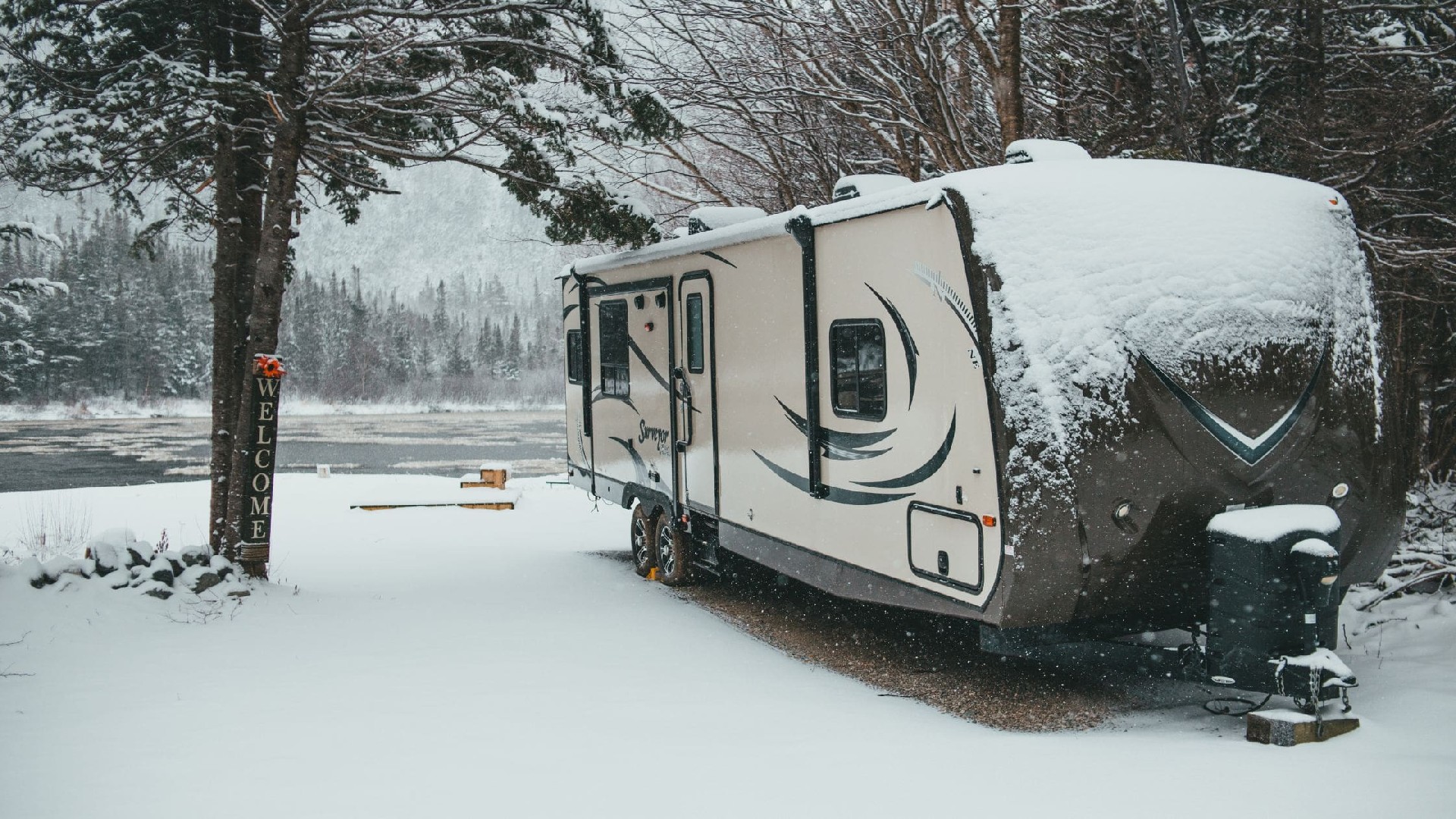
If you’re planning to live in your travel trailer during the winter, there are some essential tips we’d like to share.
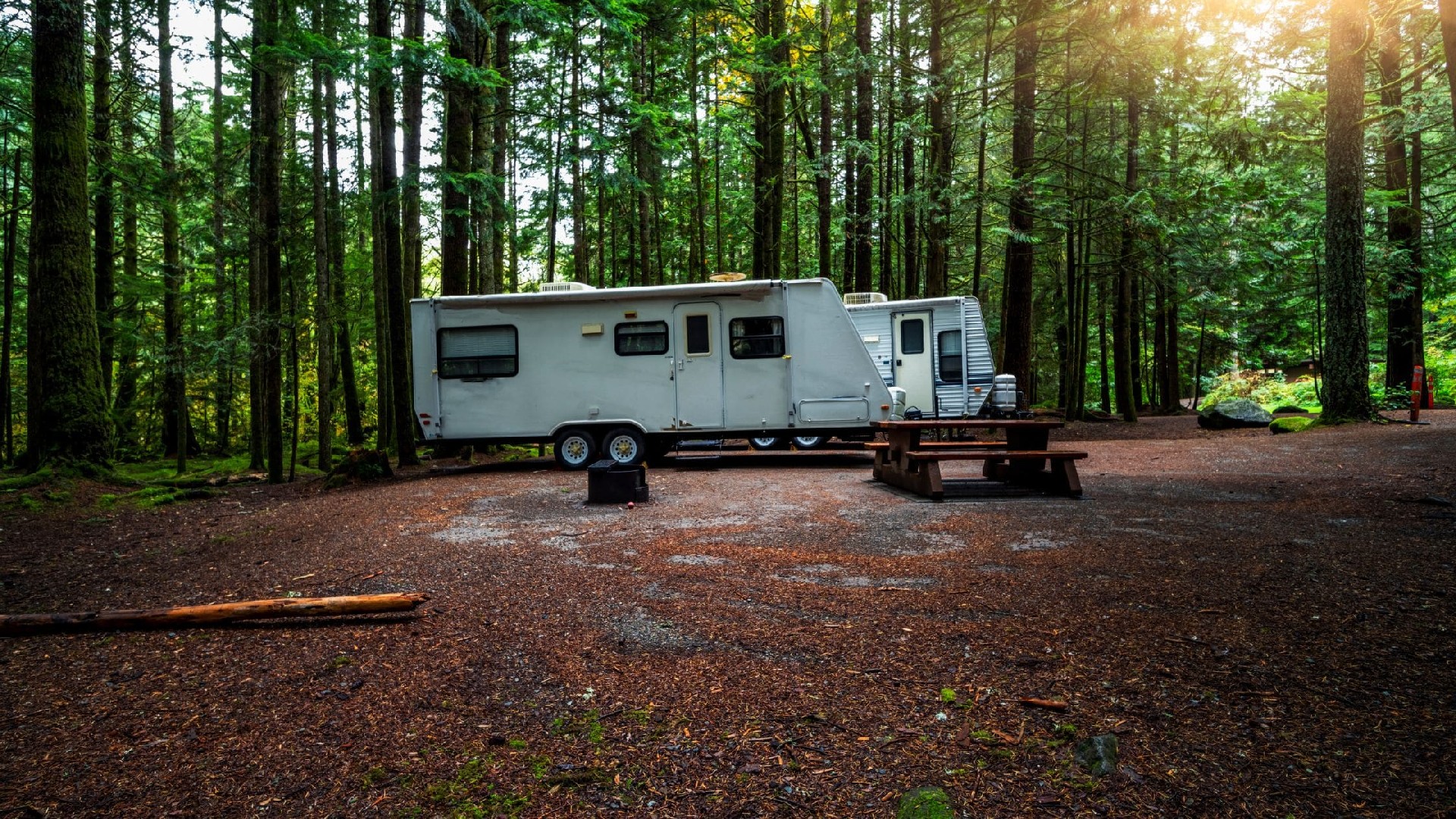
If you’re sold on the idea of RV living, it’s time to think about purchasing a travel trailer. What are the things you should be looking for? Here are some factors you should consider:
Size and layout are the two most important. If it’s just going to be you and a partner enjoying your RV full-time, you’re probably thinking a two or three-sleeper will be big enough. However, if you’re living in the travel trailer full-time, consider whether a slightly bigger one will be better because you’ll have more room for storing clothes, food, and other things. The best size is one that you can grow into over time.
In terms of layout, consider different floor plan configurations. Floor plans can differ significantly and will influence how comfortable, useful, and big the interior feels.
If you want to enjoy nature to the max, but also enjoy a touch of luxury, quality, and durability are crucial factors to consider.
Black Series has an excellent range of travel trailers that have been built with premium furnishings and European appliances in the interior. They are built for outdoor adventures and come loaded with all the features you might need.
The weight of your travel trailer is important if you’re thinking about buying a towable travel trailer.
Travel trailers tend to range between 1,200 and 9,000 pounds in weight. However, the average is around 4,000 pounds which means you’ll need a full-size pickup truck to tow one safely.
In terms of storage capacity, think about what you want to take with you when you head out on the road. If you’re going to be working while traveling, it means more storage space will be needed. The same applies if you’re RVing as a family.
When thinking about storage capacity, consider sleeping areas, working areas, general storage, and external storage space.
If you’re thinking about becoming full-time RVers, you’ve probably got a desire to break with convention and normal routines. However, you’re still going to want some comforts of home. You’ll need to make food for yourself, shower, keep your food safe, and possibly even watch a movie or two.
Choose an RV that gots an adequate number of amenities, as long as it doesn’t feel too cluttered.
Travel trailers are not very well insulated which means you’re going to feel the full force of different weather conditions, particularly changing temperatures. If you want to keep the travel trailer’s internal temperature constant, insulation, and climate control are essential features.
Your RV lifestyle is going to be dictated by the size of your fresh, gray, and black tanks. If you’re planning to spend most of your time boondocking and at public campgrounds, look for a travel trailer with larger tanks. If you’re mainly going to be staying at a full hook-up RV park, a tank size is not so crucial.
You’re going to need some appliances if you want to be comfortable, so how you’re going to power them is a big consideration. Solar power is the most obvious solution because then you’re not tied to one particular park up.
Think about how you intend to use your travel trailer because mobility matters a lot when you’re looking for a permanent RV home. If you’re planning to move from place to place every couple of weeks, a large RV isn’t the best way to go. Your choice of travel trailer should be based on how mobile and versatile you want to be.
You can live in a travel trailer very luxuriously or on a tight budget, depending on what you’re looking for from the experience.
Some of the major expenses include fuel, campsite fees, maintenance, repairs, mobile phones, wifi, and groceries. There’s also the actual cost of your travel trailer to take into account.
The final factors to consider are your RV lifestyle and preferences. These will both influence the type of travel trailer you purchase. For example, are you planning to head off road at any time? You’ll need a travel trailer that’s rugged and durable.
Travel trailer or RV full-time living has lots of benefits, but whether it’s right for you depends on your individual needs and preferences. You’ve got the cost-effectiveness, flexibility, and mobility working in its favor. But you’ve got to balance that with the lack of space and the inconveniences of living in a home on wheels.
Is it worth It to Live in a travel trailer?
The full-time RV lifestyle is definitely worth considering, financially. You have less space which means you’re not spending money on clothes, toys, and much more. You’re also saving on utilities and you’ve not got a massive mortgage to pay.
How long can you live permanently in a travel trailer?
Generally, it’s perfectly legal to live in an RV full-time for as long as you like, provided you’re not parked in one spot for more than a few weeks at a time. In some states, it’s possible to live in a travel trailer for up to six months in one location. However, some states have much stricter laws.
Explore the Black Series lineup
Ready for the trail? See the Black Series off-road trailers for sale — and browse the full lineup.
Related reading:
Keep going: How long can you stay off-grid? Solar & battery calculator · Black Series guides hub