
Your cart (0)
Your cart is empty
Tax included and shipping calculated at checkout
Your cart is empty
Tax included and shipping calculated at checkout

Winter camping isn't just for the hardcore anymore. With the right gear and the right trailer, it's actually the best way to see the most iconic landscapes without the crowds, the noise, or the summer heat. And if you're rolling with a Black Series travel trailer, you're not just camping, you're bringing a heated, insulated fortress into the backcountry.
Our 4-season insulation, independent suspension, and military-grade construction turn what most people think of as "frozen misery" into a cozy basecamp with panoramic views. Whether you're chasing powder in the Rockies or boondocking through Utah's high desert in January, this guide will show you exactly how to prep, pack, and thrive in sub-zero conditions.
Let's get real: tent camping in winter is brutal. You're cold, your gear is wet, and you spend half the night wondering if hypothermia is setting in. A travel trailer flips that script entirely.
Imagine waking up to a silent, snow-covered forest while you're warm in your own bed, brewing coffee in your heated galley, and looking out triple-pane windows at a landscape most people will never see. That's the magic of winter RVing.
Black Series models like the HQ19 and HQ21 are specifically designed for extreme weather. We're talking:
You don't have to pack up just because the temperature drops. In fact, winter is when these trailers really shine.
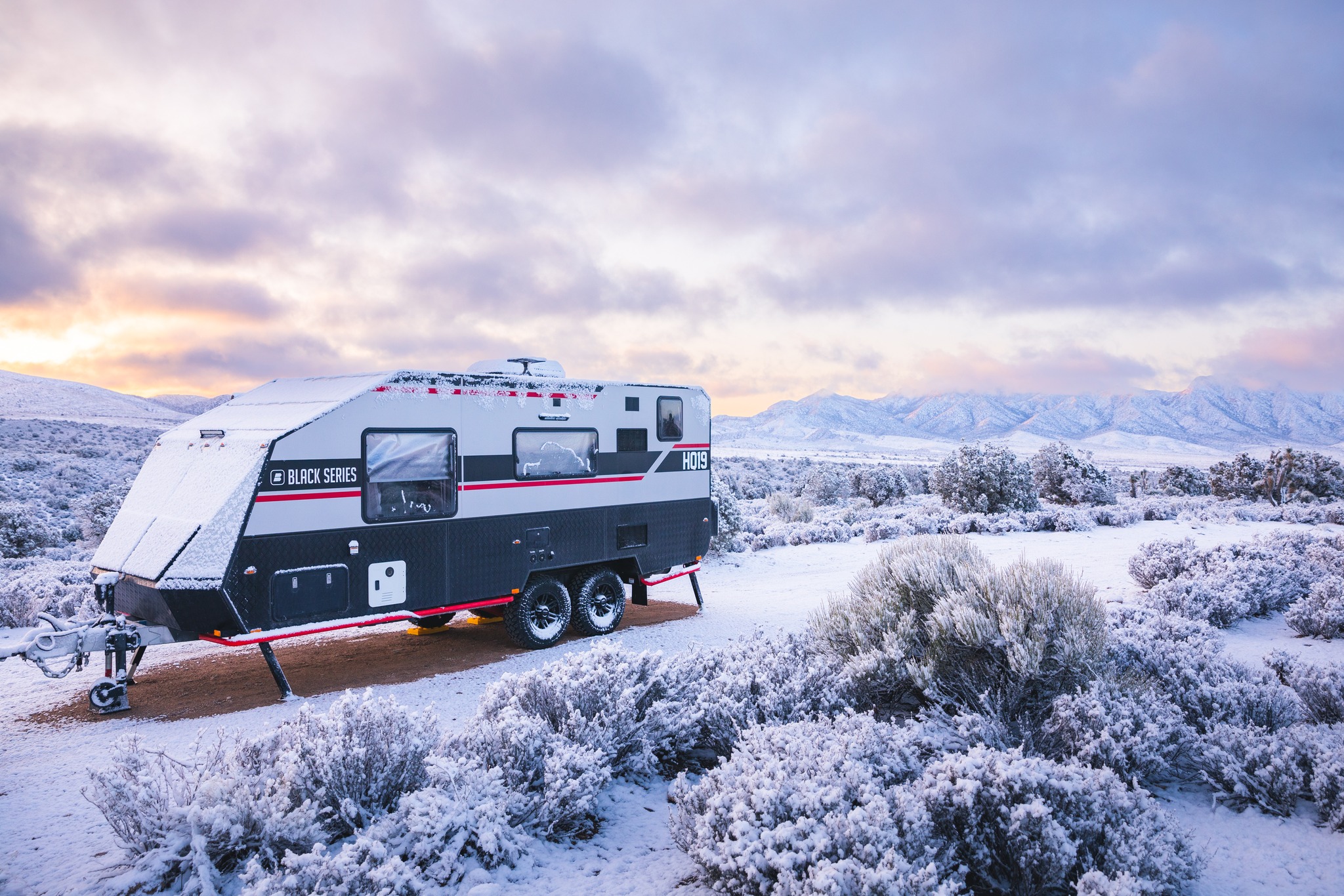
Not all trailers are created equal when it comes to cold weather. A standard "3-season" RV will struggle once temps hit freezing, but a true 4-season trailer like ours is built differently from the ground up.
Black Series trailers feature:
For heating, we install Webasto diesel air heaters as standard equipment on most models. These things are absolute game-changers, they're efficient, quiet, and can heat the entire trailer to 70°F even when it's -20°F outside. Propane furnaces work too, but they eat through fuel fast and can be loud.
Cold kills batteries. Lithium batteries (LiFePO4) handle low temps better than AGM, but even they need to stay above freezing to charge properly. Here's how to protect your power system:
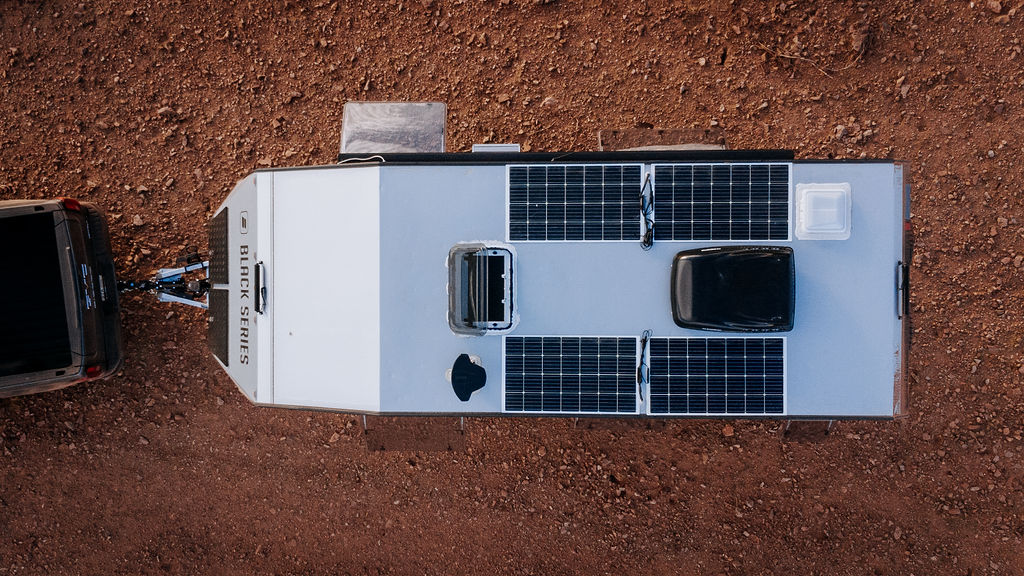
Our trailers come solar-ready with roof-mounted panels and a 2000W inverter, so you can run your heater, lights, and even a small electric blanket without ever plugging in.
Here's where things get interesting. The average travel trailer weights range from about 3,000 lbs for a small 16 ft camper to over 7,000 lbs for a fully-loaded 30 foot RV. In winter, you need to factor in:
A 16 ft camper weight typically sits around 2,800–3,500 lbs dry, making it easier to tow with mid-size trucks. An 18 ft camper weight jumps to 3,500–4,200 lbs, while a 24 ft camper weight can hit 5,000–6,000 lbs depending on build quality and features.
For serious winter travel, especially with a 30 ft camper weight or 30-foot camper weight trailer (which can weigh 6,500–8,500 lbs loaded), you'll want:
Black Series trailers are built lighter than comparably-sized traditional RVs thanks to our composite construction, but a 30 ft RV weight or 30 foot RV weight rig still demands respect on winter roads. The average weight of camper trailers in this class hovers around 7,000 lbs, and when you add snow, ice, and momentum, stopping distance increases dramatically.
Even with the best tires, you'll eventually hit a patch of ice or get stuck in snow. Pack:
Your trailer's heater can fail. Your generator can run out of fuel. Always have backup warmth:
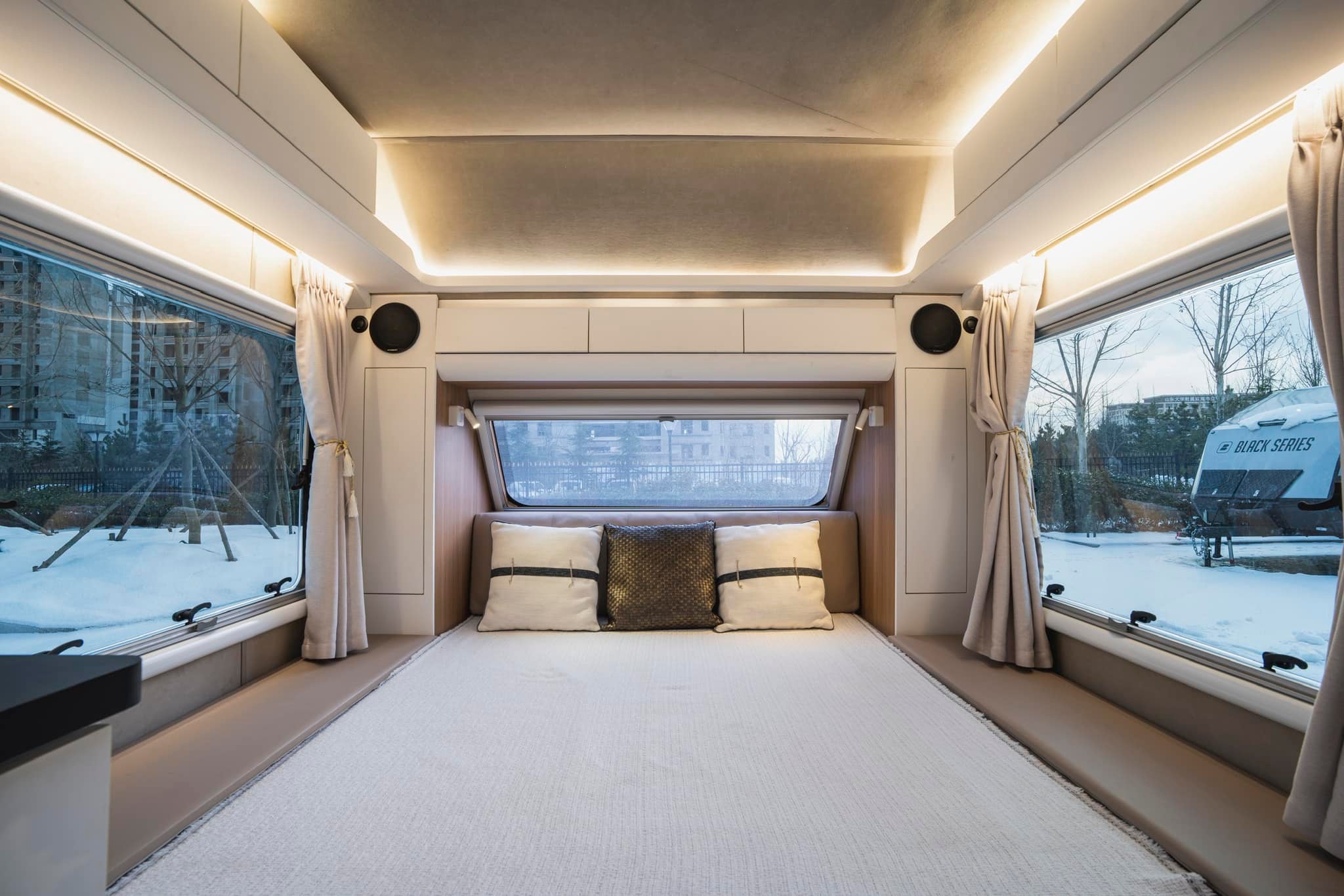
Black Series interiors are designed with thick mattresses and overhead storage for bulky winter gear, so you're not cramped even with all the extra clothing.
Cell service disappears fast in the backcountry. If you're boondocking in winter, bring:
There's a huge difference between winterizing for storage and keeping your trailer ready for active winter camping. Most RV guides assume you're shutting down for the season. We're not doing that.
One critical note: Snow load on the roof is real. The average travel trailer weights we mentioned earlier don't account for 6 inches of wet snow adding 300+ lbs to the roof. Brush it off regularly, especially if you're parked for multiple days. Our trailers are built tough, but no RV is designed to carry a permanent snow pile.
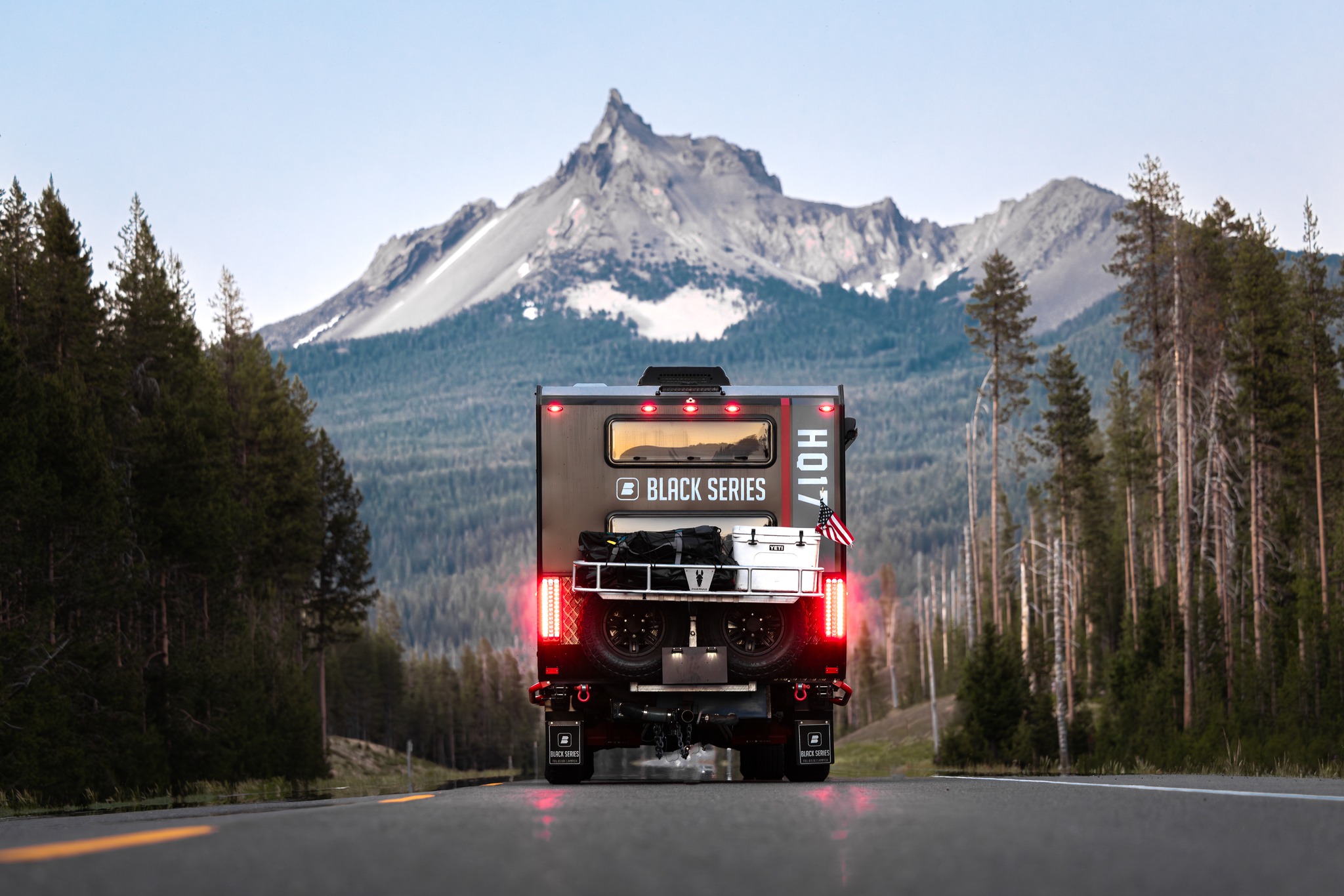
If you've got an off-road travel trailer like the Black Series HQ17 or HQ19, the world opens up in winter. Here are our top picks:
Open year-round, but winter access is limited. The Mammoth Hot Springs area stays open for RVs, and you'll see bison, elk, and geothermal features without the summer mobs.
The Gros Ventre campground sometimes stays open into late fall/early winter. Backcountry access requires permits, but dispersed camping on nearby BLM land is fair game.
High-desert winter camping is underrated. Days are sunny and 40°F, nights drop to 20°F. Perfect for a heated trailer. The trails are empty, and the red rock looks even better dusted with snow.
If you're on the East Coast, the White Mountain National Forest has winter camping with plowed access to some sites. Pair it with skiing or snowshoeing.
For serious adventurers, the Alpine Loop and surrounding forest roads become winter playgrounds. Just make sure your tow vehicle and 24 ft camper weight setup can handle steep, icy grades.
Cold windows + warm interior = dripping walls. Combat this by:
Black Series trailers use moisture-resistant materials, but physics is physics: warm, humid air will condense on cold surfaces.
Propane vaporizes poorly below 0°F. If your furnace sputters out in extreme cold:
When you're towing in winter, weight matters even more. A 30 ft RV weight trailer with poor tongue weight will fishtail on black ice. A 16 ft camper weight trailer with too much tongue weight will overload your truck's rear axle. Use a weight-distributing hitch and check your 30 ft camper weight against your truck's tow rating: including the "wet weight" with full tanks and gear.
If you feel the trailer pushing the truck around corners, you're either going too fast or your load isn't balanced. Pull over, repack, and adjust.
Use a combination of diesel or propane heating, proper insulation (look for R-9+ ratings), and keep interior cabinet doors open to circulate warm air to plumbing. Black Series trailers come standard with Webasto diesel heaters that can maintain 70°F interiors even in sub-zero conditions.
Diesel heaters (like Webasto or Espar) are the gold standard: they're efficient, quiet, and work at extreme temps. Propane furnaces work but use more fuel. Avoid electric space heaters unless you're plugged into shore power; they drain batteries fast.
Keep the heater running 24/7, leave cabinet doors open, and use heated tank pads if boondocking in extreme cold. If you're connected to external water, wrap the hose with heat tape. Black Series trailers have enclosed, insulated tanks that stay above freezing as long as the heater is on.
Absolutely. You'll need a robust solar setup (400W minimum), lithium batteries, a diesel heater, and large water tanks. Black Series trailers are purpose-built for winter boondocking with 40+ gallon fresh tanks, 2000W inverters, and solar-ready roofs.
Start small. Camp near civilization your first few trips, test your systems in cold weather, and always have an emergency plan. Winter camping is safe if you're prepared, but it's less forgiving than summer. Make sure you understand your trailer's weight (whether it's an 18 ft camper weight or a full 30-foot camper weight rig) and how it handles on ice.
The 30 foot RV weight or 30 ft RV weight typically ranges from 6,500 to 8,500 lbs when fully loaded, depending on construction and features. The 30 ft camper weight or 30-foot camper weight can increase further with snow load and winter gear. Always check your specific model's GVWR.
Smaller trailers (16 ft camper weight or 18 ft camper weight) are easier to tow and heat but have limited space. A 24 ft camper weight trailer offers a good balance. Larger models (30 ft+) provide more comfort but require bigger tow vehicles and use more fuel to heat. Black Series offers sizes from the compact HQ12 to the spacious HQ21, all winter-ready.
Winter camping in a travel trailer isn't about suffering: it's about access. Access to places that are impossible to reach in summer. Access to solitude. Access to landscapes that look like another planet when they're covered in snow.
But you need the right gear. A standard RV will leave you cold, frustrated, and possibly stranded. A Black Series trailer: with its 4-season insulation, independent suspension, and off-grid power systems: turns winter into your best camping season.
Whether you're towing a compact 16 ft camper weight rig for solo trips or a full 30 ft camper weight family hauler, the key is preparation. Know your average travel trailer weights, understand how winter affects towing, and always pack backup heating and emergency gear.
Winter is waiting. The crowds are gone. The trails are empty. The views are unreal.
Ready to explore? Check out our full lineup of off-road travel trailers and see which model fits your cold-weather adventures. Or dive into our guide on off-road trailer maintenance to make sure you're ready for anything the backcountry throws at you.
Stay warm out there. 🔥❄️
Explore the Black Series lineup
Ready for the trail? See the Black Series off-road trailers for sale – and browse the full lineup.
Related reading:
Keep going: Black Series guides hub