
Your cart (0)
Your cart is empty
Tax included and shipping calculated at checkout
Your cart is empty
Tax included and shipping calculated at checkout

All-terrain travel trailers are specialized towable RVs engineered for complex road conditions including gravel roads, washboard surfaces, muddy trails, and remote camping areas, designed to work seamlessly with SUVs and pickup trucks. These rugged campers solve a critical pain point: traditional travel trailers restrict families to paved campgrounds, while all-terrain models unlock access to BLM public lands, national forests, mountain trails, and secluded backcountry sites across America. Black Series stands as a premier manufacturer in this space, utilizing advanced off-road independent suspension, reinforced chassis construction, and 360° articulation hitch systems to deliver uncompromising durability.
Who This Guide Is For:
• Families seeking access to remote desert, forest, and mountain camping in the American West
• SUV and truck owners wanting lightweight road trip solutions with mild off-road capability
• Adventure seekers planning multi-day off-grid excursions away from crowded campgrounds
What You'll Learn:
• How to select the right all-terrain travel trailer configuration for your needs
• Essential hardware checklist for evaluating suspension, chassis, and off-grid systems
• Market pricing ranges and vehicle compatibility guidelines
• Black Series model performance across different terrain challenges
An all-terrain travel trailer prioritizes enhanced ground clearance (typically 12-18 inches), off-road suspension systems, all-terrain tire packages, reinforced chassis construction, and stone guard protection. The core distinction from standard travel trailers lies in structural durability, all-terrain models withstand the punishment of washboard roads, rocky approaches, and uneven terrain that would damage conventional RVs built primarily for paved campground use.
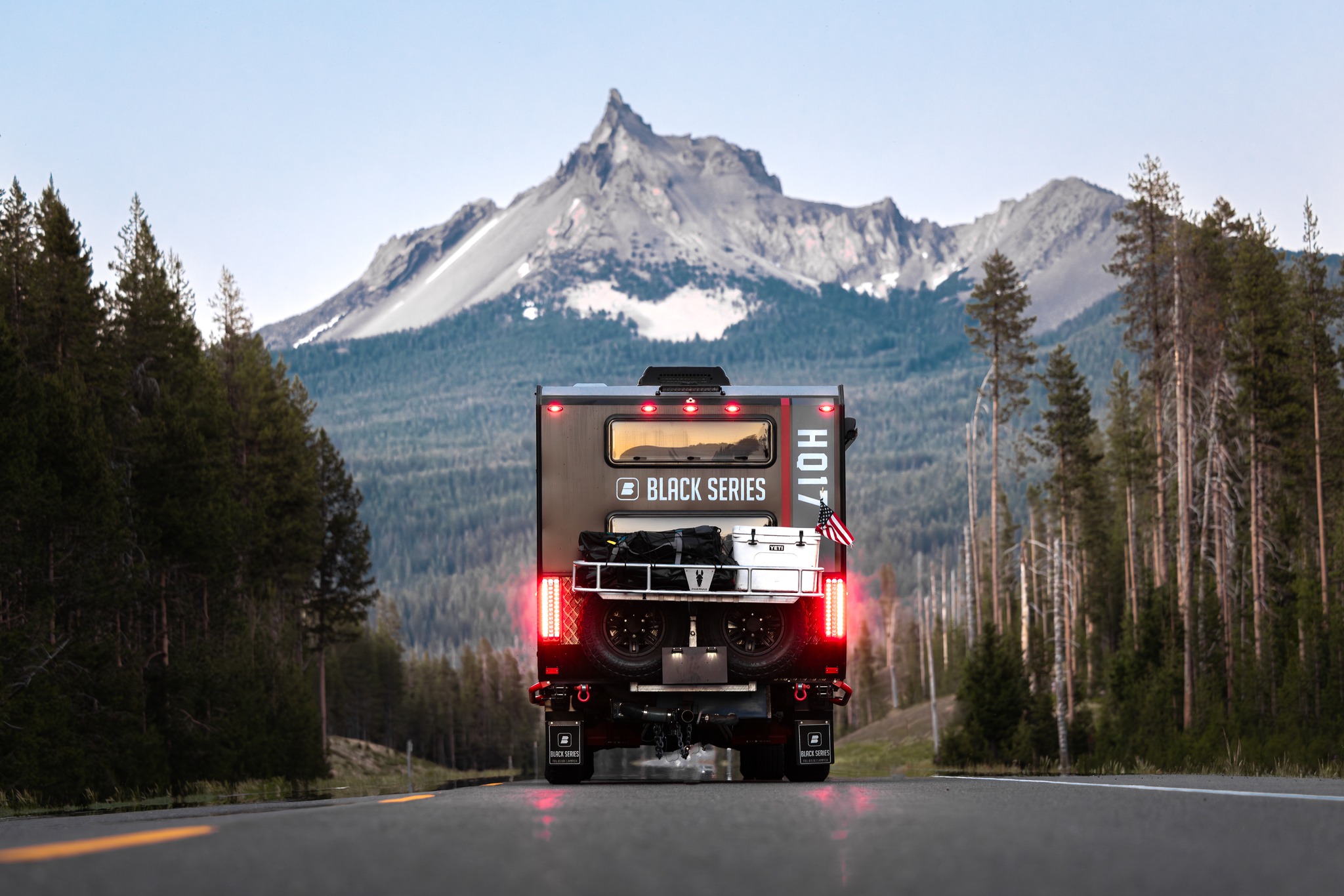
The American RV industry shows towable recreational vehicles commanding over 60% of total market share, with the all-terrain and off-road subsegments experiencing accelerated growth. Industry analysis indicates the off-road trailer market is expanding at an 8-12% compound annual growth rate through 2026, driven by increased outdoor recreation participation and housing costs pushing consumers toward "mobile second homes."
Entry-Level All-Terrain Options: Starting around $15,000-25,000 for basic teardrop and small hard-sided models with essential off-road upgrades but minimal amenities.
Family-Configured All-Terrain Trailers: Typically range $35,000-65,000 for full-featured models with sleeping for 4-6 people, complete kitchens, bathroom facilities, and comprehensive off-grid systems.
Premium Expedition-Grade Models: Command $70,000-120,000+ for Australian-built or military-specification trailers with ultimate durability and luxury appointments.
Note: Pricing varies significantly by specific configuration, dealer location, and seasonal demand. Contact authorized Black Series dealers for current model-specific quotes.
Independent Suspension Systems represent the gold standard for all-terrain performance. Multi-link independent suspension with dual shock absorbers provides superior wheel articulation, improved traction on uneven surfaces, and dramatically enhanced ride comfort compared to traditional leaf spring setups. Black Series employs advanced independent suspension technology across their HQ series, enabling confident navigation of rocky desert washes and mountain fire roads.
Chassis Reinforcement distinguishes serious all-terrain trailers from light-duty recreational models. Look for fully welded steel or aluminum space-frame construction, integrated rock sliders, and strategic reinforcement at stress concentration points. The chassis must distribute loads effectively while maintaining structural integrity under torsional stress from off-camber terrain.
Minimum 14-inch ground clearance enables negotiation of most forest service roads and moderate rock obstacles without dragging the undercarriage. Premium all-terrain models often feature 16-18 inches of clearance for serious backcountry access. Equally important are approach and departure angles, the maximum slope angles the trailer can enter or exit without contact. Optimal geometry prevents high-centering on steep camping area entrances or stream crossings common throughout Western public lands.
All-terrain tire packages typically feature aggressive tread patterns designed for mixed-surface traction, often in larger diameters (15-17 inches) compared to standard trailer wheels. Heavy-duty wheel construction with appropriate load ratings ensures reliability under the increased stress of off-pavement travel. Black Series models often ship with premium all-terrain rubber suited to American Southwest conditions.
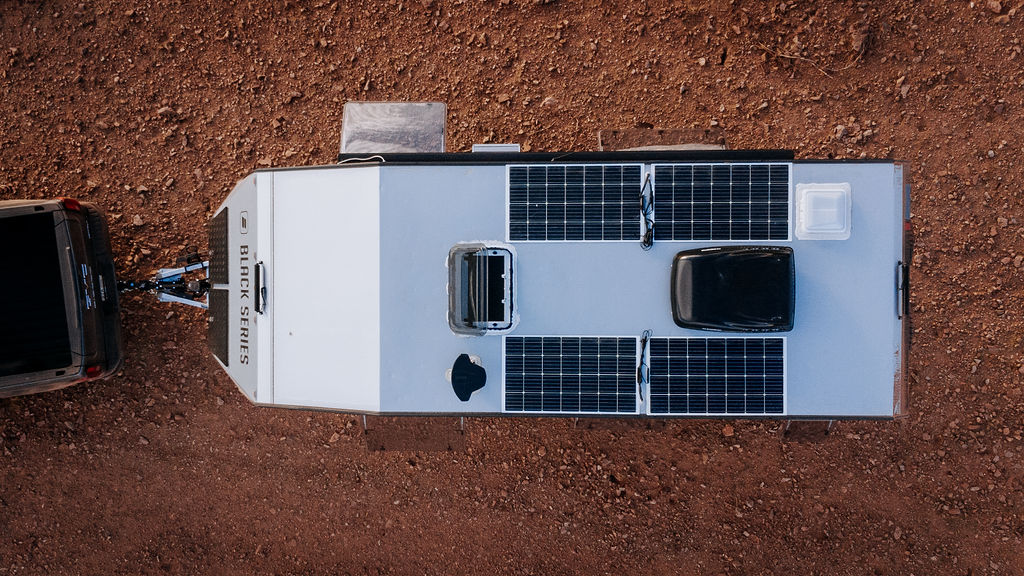
Electrical Systems: Modern all-terrain trailers require robust 12V systems with lithium battery banks (minimum 200Ah recommended), solar charging capability (300W+ arrays), and quality inverters for AC appliances. This configuration supports extended off-grid stays without generator dependence, critical for quiet wilderness camping and BLM dispersed camping compliance.
Water Storage: Fresh water capacity of 40-60+ gallons accommodates family usage for 3-5 days without refill, while gray water tanks handle shower and kitchen drainage. Learn more about dispersed camping requirements for extended off-grid adventures.
Family-focused all-terrain trailers balance rugged capability with livability. Key considerations include:
Dry weight directly impacts tow vehicle requirements and fuel economy. Lightweight all-terrain trailers (under 4,000 lbs) work well with mid-size SUVs and half-ton trucks, while heavier expedition models require three-quarter ton or larger tow vehicles. Always verify your vehicle's actual towing capacity and payload ratings before selection.
The Black Series HQ19 and HQ21 exemplify family-focused all-terrain design, offering sleeping for 4-6 people, full kitchen facilities, bathroom amenities, and substantial storage capacity. These models feature Black Series' signature independent suspension, 15+ inches of ground clearance, and comprehensive off-grid systems supporting multi-day adventures across American national forests and desert regions.
The HQ19's compact 19-foot length maintains maneuverability on narrow mountain roads while providing essential family amenities. The HQ21 extends living space for larger families or extended trips, with enhanced storage and comfort features suited to long-distance road trips through varied terrain.
For families with mid-size SUVs or those prioritizing fuel economy, the Black Series HQ12 delivers impressive all-terrain capability in a lightweight package. At approximately 3,200 lbs dry weight, the HQ12 works well with vehicles like the Toyota 4Runner, Chevrolet Tahoe, or Ford Expedition while providing sleeping for 2-3 people and essential off-grid systems.
The Classic series offers additional entry-level options with proven off-road suspension and simplified interior configurations, ideal for weekend warriors focusing on capability over luxury amenities.
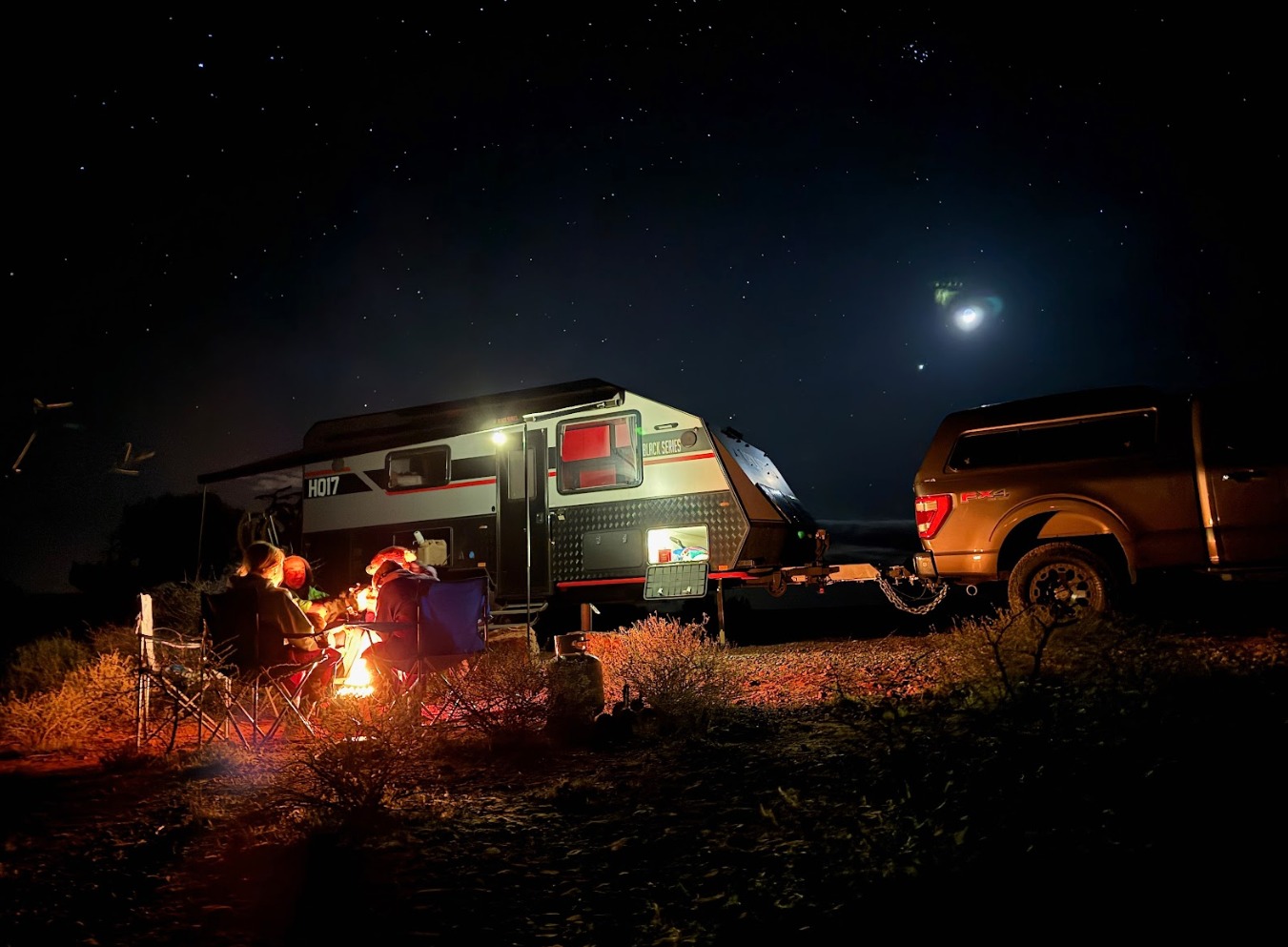
For serious backcountry access requiring maximum ground clearance and suspension articulation, premium all-terrain models feature military-specification components, extensive underbody protection, and expedition-grade electrical systems. These trailers excel in technical terrain like Utah's canyon country, Colorado's high-altitude passes, and Arizona's rocky desert trails where standard recreational trailers cannot venture.
When budget constraints require careful prioritization, invest primarily in suspension quality, chassis construction, and ground clearance, the core features enabling all-terrain access. Interior luxury can be upgraded over time, but fundamental structural capabilities cannot be retrofitted. Quality independent suspension and robust chassis construction provide the foundation for years of reliable off-road service.
Weekend Camping: 2-3 day trips to state parks, national forests, and established dispersed camping areas. Focus on reliability and ease of setup rather than extensive off-grid capability.
Extended Road Trips: Week-long or longer adventures through multiple states, requiring substantial water/power capacity and comfortable living spaces for family harmony on long drives.
Full-Time Overlanding: Seasonal or year-round travel prioritizing off-grid self-sufficiency and access to remote locations far from services and resupply.
Verify your vehicle's actual towing capacity through the manufacturer's specifications, not generic online estimates. Calculate total trailer weight including full water tanks, gear, food, and personal items, this loaded weight must remain within your tow vehicle's limits with adequate safety margin.
Consider factors like:
Match trailer length to your typical camping scenarios. Longer trailers provide more amenities but become challenging on tight forest roads and small camping areas common in wilderness settings. Consider your family's space requirements for sleeping, food preparation, and gear storage throughout different seasons and trip lengths.
When evaluating potential trailers, personally examine:
Estimate your family's daily power consumption (lights, water pump, refrigerator, electronics charging) and water usage (cooking, cleaning, drinking, bathing) to properly size electrical and plumbing systems. Under-capacity systems create frustration and limit adventure possibilities, while oversized systems add unnecessary weight and cost.
Beyond purchase price, factor in:
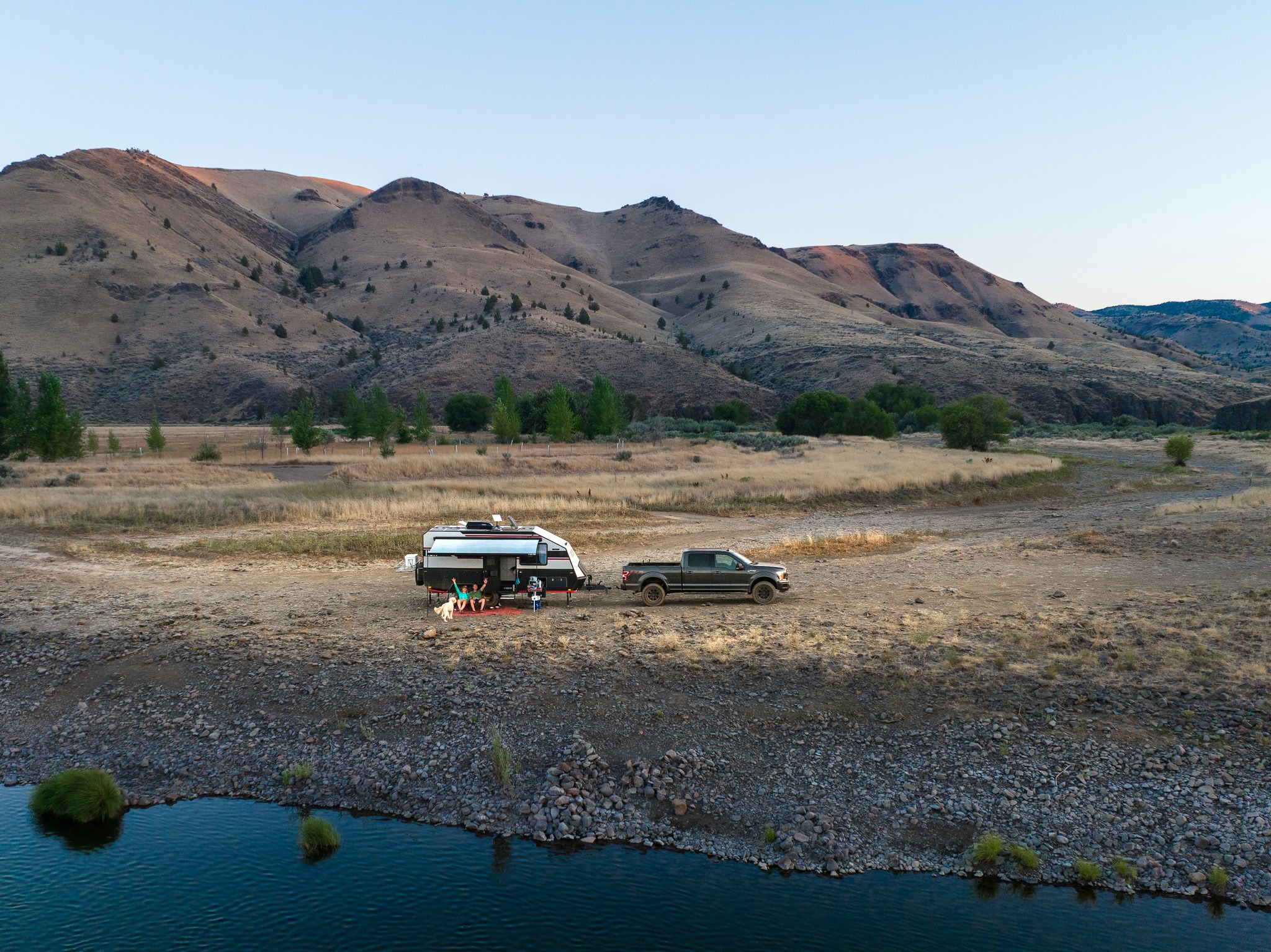
Based on 2026 market analysis, family-oriented all-terrain travel trailers typically feature:
These ranges represent common industry specifications. Individual models may exceed these parameters based on specific design priorities.
Consider a representative American family's experience: parents with two teenagers utilizing a Black Series HQ19 for a three-week circuit through Utah, Arizona, and Colorado. Their route included paved highways, maintained gravel roads, primitive forest service roads, and challenging desert washes near Moab and Sedona.
The family reported confidence-inspiring stability on washboard surfaces, adequate ground clearance for rocky approaches to scenic camping locations, and sufficient off-grid capacity for 4-day stretches between resupply stops. The independent suspension prevented fatigue-inducing jolting common with conventional travel trailers on rough surfaces, while the outdoor kitchen facilitated meal preparation in spectacular natural settings unavailable to standard RVs.
The all-terrain trailer market's sustained growth reflects fundamental American lifestyle trends rather than temporary enthusiasm. Increasing outdoor recreation participation, rising traditional campground costs, and preference for uncrowded natural experiences drive continued demand for capable off-road camping solutions. This growth trajectory supports strong resale values for quality all-terrain trailers compared to conventional recreational vehicles.
Proper load distribution prevents dangerous trailer sway and maintains vehicle handling characteristics. Place heavy items low in the trailer and centered over the axle(s), with 60% of cargo weight forward of the axle centerline. Maintain recommended tongue weight (typically 10-15% of total trailer weight) through careful loading and weight distribution hitches when necessary.
Reduce speed significantly on rough surfaces, washboard roads at highway speeds damage both tow vehicle and trailer components while creating dangerous handling situations. Use lower gears and engine braking on steep descents rather than relying solely on wheel brakes, which can overheat during extended downhill towing.
When encountering technical terrain, scout on foot before committing your rig to questionable routes. All-terrain trailers enable access to remote areas, but mechanical problems far from assistance create serious safety and financial consequences.
Black Series trailers undergo extensive real-world testing in Australian outback conditions that often exceed typical American off-road environments. This validation process identifies potential failure points and drives design improvements in suspension mounting, chassis reinforcement, and component selection. The result is enhanced reliability in challenging terrain compared to trailers designed primarily for mild recreational use.
What is an all-terrain travel trailer and how does it differ from regular travel trailers?
All-terrain travel trailers feature enhanced ground clearance (14+ inches), off-road suspension systems, reinforced chassis construction, and all-terrain tire packages specifically designed for unpaved roads and rough terrain. Regular travel trailers prioritize interior space and amenities while assuming paved road access, making them unsuitable for forest roads, desert washes, and remote camping areas.
Do I need a 4x4 tow vehicle for an all-terrain travel trailer?
While beneficial for traction in challenging conditions, 4x4 capability isn't mandatory for most all-terrain trailer use. Many forest roads and BLM camping areas are accessible with 2WD vehicles when combined with capable all-terrain trailers. However, 4x4 provides valuable insurance for soft sand, mud, or steep grades common in remote camping scenarios.
How much do all-terrain travel trailers typically cost in the United States?
Entry-level all-terrain trailers start around $15,000-25,000 for basic configurations, while family-oriented models with full amenities range $35,000-65,000. Premium expedition-grade trailers command $70,000-120,000+ for ultimate capability and luxury. Pricing varies by manufacturer, specific features, dealer location, and current market demand.
Are all-terrain travel trailers suitable for families with children?
Yes, many all-terrain trailers are specifically designed for family use, offering bunk beds, ample storage, full kitchens, and bathroom facilities. Models like the Black Series HQ19 and HQ21 accommodate 4-6 people comfortably while maintaining off-road capability for accessing family-friendly dispersed camping areas away from crowded campgrounds.
What size all-terrain travel trailer works best with SUVs?
Mid-size SUVs typically handle all-terrain trailers up to 4,000-5,000 lbs dry weight effectively. Compact models like the Black Series HQ12 or Classic series provide excellent capability while remaining within most SUV towing limits. Always verify your specific vehicle's towing capacity and consider factors like payload, passengers, and cargo when calculating total system weight.
Can Black Series all-terrain travel trailers handle rocky desert roads and mountain trails?
Black Series trailers feature independent suspension, reinforced chassis construction, and 15+ inches of ground clearance specifically engineered for challenging terrain including rocky desert washes, forest service roads, and mountain trails common throughout the American West. Their Australian heritage includes extensive testing in conditions that often exceed typical American off-road environments.
What maintenance is required after off-road or all-terrain trips?
Post-trip maintenance should include inspection of suspension components, tire condition, chassis for damage, and thorough cleaning of undercarriage components to remove corrosive road salt or debris. Check all electrical connections, water system function, and appliance operation. More frequent service intervals may be required compared to highway-only travel due to increased component stress from rough terrain.
How do I know if my tow vehicle can safely handle a specific all-terrain trailer?
Calculate total system weight including trailer, full tanks, cargo, passengers, and gear, ensuring this stays within your vehicle's Gross Combined Weight Rating (GCWR). Verify adequate tongue weight capacity and proper hitch class. Consider additional factors like transmission cooling, brake controller compatibility, and engine power for mountain grades common in Western outdoor recreation areas.
Explore the Black Series lineup
Ready for the trail? See the Yellow Stone vs Rocky Mountain editions — and see which build is worth it.
Related reading:
Keep going: How long can you stay off-grid? Solar & battery calculator · Compare all eight models · Black Series guides hub