
Your cart (0)
Your cart is empty
Tax included and shipping calculated at checkout
Your cart is empty
Tax included and shipping calculated at checkout

Table of Contents
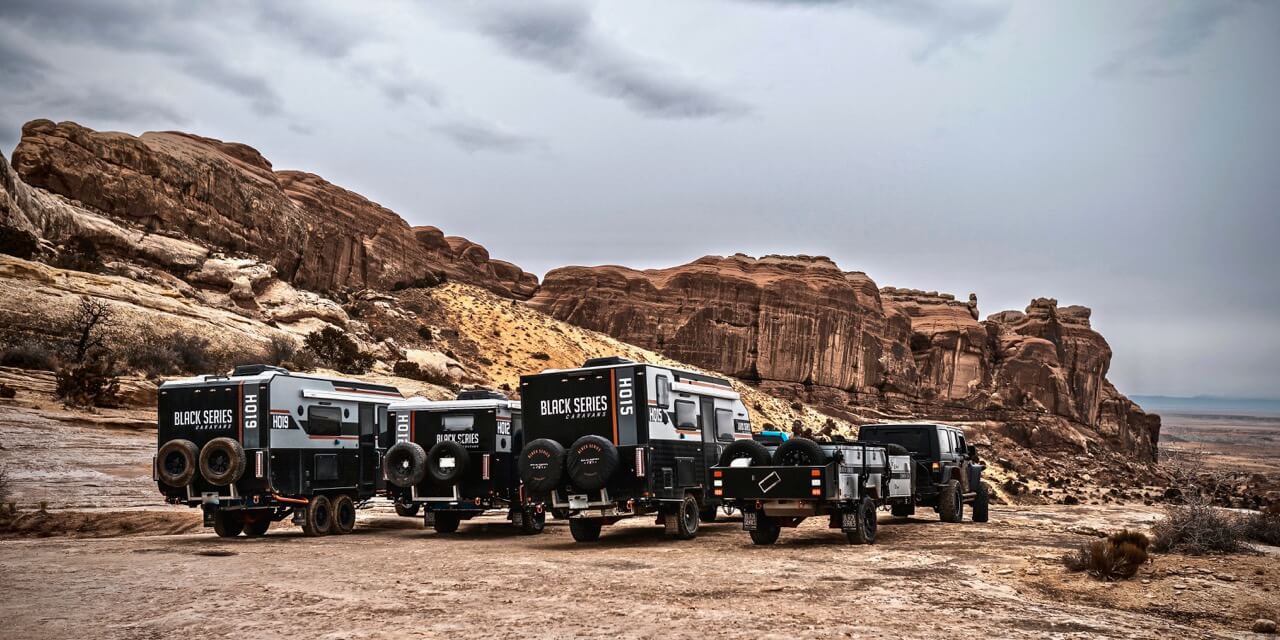
If you’re new to the world of RVs and travel trailers you might be feeling a little overwhelmed. The recent coronavirus pandemic has meant a resurgence in the number of families looking to escape and still be able to maintain social distancing. With a travel trailer, motorhome, or RV you get to explore an area without having to rely on hotels, motels, restaurants, and restrooms.
One of the more affordable ways to enjoy this kind of lifestyle is with a travel trailer. They’re relatively cheap compared to a much larger RV and quite often, the tow vehicle doesn’t need a fifth wheel or be a big SUV or truck to haul it around. You’ll also find them in various sizes, designs, and prices.
If you’re wondering what to look for when you’re choosing a travel trailer, this post is the best advice you’ll find.
One of the first things you need to think about is what you’re going to use it for. If you’re planning to use it for weekends away, the best RV is not going to be the same if you’re planning weeks away exploring national parks.
The time of year you’re planning to enjoy your camping trips is also an important factor. The features that will be more beneficial for winter sojourns are going to be different if you’re only going to use your vehicle for summer road trips.
One of the most critical things you’ve got to do is match the travel trailer with how you plan to use it.
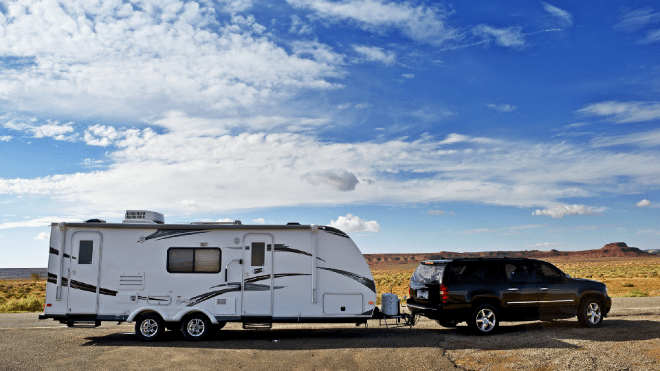
Buying truck campers isn’t one of the easiest decisions you’ll ever have to make, but if you’ve got an understanding of what’s required, your RV purchase will be smoother.
It’s a good idea if you know what type of travel trailer you’re looking for. There are several to choose from, for example:
Whatever type of trailer you purchase, you need a tow vehicle that will be able to handle the work. If your vehicle doesn’t have the correct tow capacity and is not capable of safely towing, you’ll also need to look at different tow vehicles, such as a pickup truck or an SUV. Having to buy a tow vehicle as well will eat into your budget so bear this in mind.
You’re also going to need to get comfortable using the tow vehicle. Maneuvering tow vehicles around can be very difficult and take some getting used to.
Truck campers, small travel trailers, or pop up campers are a good starting place before you move up a level to fifth wheels or travel trailers.
 There are several things you need to be aware of if you’re planning to tow your trailer. Not only do you have to select a towing vehicle capable of towing the recreational trailer. You also have to learn how a fifth wheel or ball and hitch connector works and how to choose one, how to couple and uncouple the pickup truck and trailer, and how to drive safely.
However, before all of that, you must make sure your driving license allows you to tow the trailer. Most recreational trailers weigh less than 4,600 kg and you can tow such a vehicle with a Class 5 or 7 passenger car driver’s license. If the truck or trailer has air brakes, you’ll need an air brake endorsement.
The class of driver’s license or license endorsement you need to tow a trailer depends on its weight. It has nothing to do with whether there is a fifth wheel. For driving licensing purposes, trailer weight means its actual weight when it is being towed or the payload capacity.
If you want to tow a recreational vehicle that weighs more than 4,600 kg and the trailer or truck doesn’t have air brakes, you’ll need a Class 1, 2, or 3 driver’s license.
Alternatively, you’ll need a Class 4 or 5 driver’s license with a heavy trailer endorsement or a Class 4 or 5 driver’s license with a horse trailer endorsement.
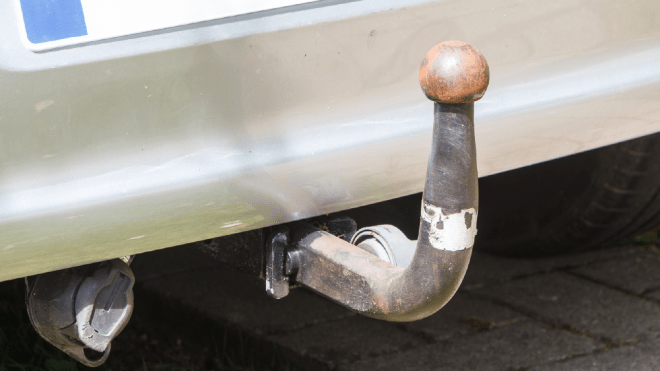
Safe hauling of your trailer depends not just on the tow capacity of the tow vehicle. The right trailer hitch is also essential which means you need to understand trailer hitch classifications. If the trailer hitch isn’t the right fit for the job it could be a disaster.
It might not be the right size for the tow vehicle or it might not be strong enough to carry the load. The different hitch classes are as follows:

Living space is going to be at a premium in your camping trailer so think about the things you’ll be taking with you on your adventure. It helps if you make a list. If you’d like a few ideas, here are some suggestions:
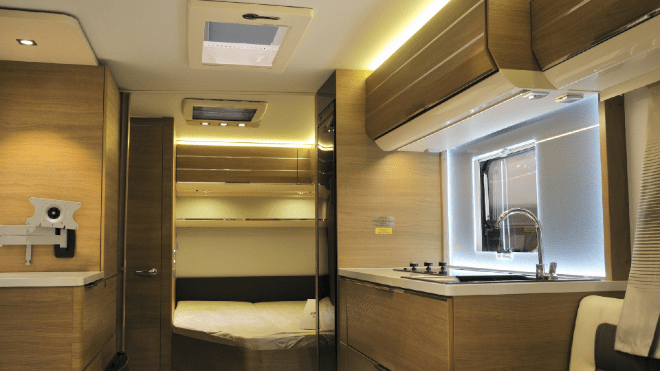
Storage issues are common with travel trailers, but there are lots of things you can do to get more space. Here are a few ideas you might want to consider:
If you’ve got an RV it’s a great way to travel and spend time with family and friends. Some of your most memorable camping moments could be just around the corner. However, it’s crucial that everyone who tags along is comfortable, otherwise, your great outdoor adventures are not going to be quite so much fun.
Consider the following when you’re choosing your next trailer:
A newer RV will have more options than a used one because it is likely to be more modern and up-to-date with all the latest additions. For example, older trailers or RVs tend not to have slides or somewhere for you to install a microwave or TV.
Some things will be easy to upgrade, for example, seat cushions and toilets. However, there are numerous things you can’t upgrade quite so easily.

The drain system of the vehicle you’re purchasing needs to be fully functional and large enough to cope with the demands you’re going to put it under.
The water system in a trailer is essential in getting the maximum utility and comfort. Unfortunately, there is a part of it that is not so glamorous although it is necessary. Maintaining and emptying the drain and septic system can get pretty messy if you haven’t got the right equipment.
The gray water tank is what holds the dirty water from your shower (if you’ve got one) and the kitchen sink. The black tank is where the wastewater from the toilet is held. If your motorhome doesn’t have a gray tank, all dirty water is dispensed into this tank.
The size of these tanks, along with the number of people using your trailer is what determines the frequency you have to empty them. You may have a sensor in the tanks that tells you when they need emptying, although this is not a common feature. After a few years, such sensors don’t always work so well.
Most people aren’t going to pay for their RV upfront. If you can then that’s a good thing. On the other hand, if you haven’t got the funds to pay for your RV outright you’ll need to consider financing options.
Many dealerships will offer a payment plan and loan to help you buy your motorhome. If your credit is good there should be no problem finding good deals.
Maintenance and repairs to a travel trailer soon mount up so it’s important to understand what these are before you make such a long-term investment. Personal maintenance costs are heavily dependent on several factors. For example, they vary depending on your trailer, A fifth-wheel camper will have different requirements to a motorhome. It also depends on how often you use your motorhome and the amount of wear and tear it undergoes each year.
That being said, it is possible to give some generalizations. Typical maintenance tasks and an estimate of the costs are as follows:

The cost of insurance for your recreational vehicle depends on several other things, for example:
You can expect to pay anything from $200 right up to $3,000. Part-timers usually expect to pay less than $1,000, while full-timers could find themselves paying as much as $2,000 to $3,000. For smaller trailers, the cost will be much less.
Dealerships often offer warranties on what they sell, whether they’re new or used doesn’t matter. Most of the time, warranties cover anything that might break soon after you buy the RV. Typically, the warranty of a used trailer will be much shorter than a new one.
Discover the ultimate off-road experience with Black Series Travel Trailers! Built for durability and adventure, our premium off-grid trailers boast a 15-year structural warranty and 1-year standard warranty for peace of mind. Tackle any terrain with confidence, thanks to our patented suspension system and rugged construction. Luxury meets off-road with stylish interiors and top-notch European appliances.

In the camping world, there are places for both new and used trailers. Each has its pros and cons. If money is an issue, you’re best starting out with a used RV as it is a very cost-efficient option. A manufacturer’s suggested retail price is always going to be higher for a new trailer.
Some of the things you need to double check if you’re looking at a used RV will be:
If you’re buying a used RV, it’s much safer if you make your purchase from local dealers rather than a private seller. However, you may still have issues to deal with.
With a new vehicle, on the other hand, the manufacturer’s warranty and any extended warranty you buy through the dealer should cover many issues. You’ve got that safety net, should something go wrong.
Whatever trailer you buy, make sure you give the decision as much of your time as possible. It’s important that you pace yourself and do your research.
There is one way you could speed up the process slightly, and that’s to rent a few trailers before you commit and make the ultimate financial investment.
Explore the Black Series lineup
Ready for the trail? See the Black Series off-road trailers for sale — and browse the full lineup.
Related reading:
Keep going: Black Series vs Outdoors RV · Black Series vs Off Grid Trailers · Walkthrough videos · Compare all eight models