
Your cart (0)
Your cart is empty
Tax included and shipping calculated at checkout
Your cart is empty
Tax included and shipping calculated at checkout

An RV trade-in value calculator estimates what a dealer might offer for your current rig when you're ready to upgrade. These tools use market data, vehicle specifications, and regional demand to generate a ballpark figure: not a final offer, but a solid starting point for negotiations.
What you'll typically need to input:
Ready to skip the guesswork? Get a trade-in offer from Black Series and see what your rig is actually worth toward an off-road capable upgrade.
An RV trade-in value calculator is a market-data-driven tool that estimates the dollar amount a dealer might credit toward your next RV purchase. It's essentially a digital appraiser that crunches numbers based on industry pricing guides, recent sales data, and regional market conditions.
Before diving in, you need to understand three distinct value types:
Trade-in value is always lower than retail because dealers need margin for reconditioning, marketing, and profit. However, the convenience factor often makes up the difference.
Industry Standard: J.D. Power RV Values (formerly NADA Guides) serves as the primary reference for dealers across the United States. When a dealer pulls up your RV's value, they're likely starting with J.D. Power data before making adjustments based on their own inspection.
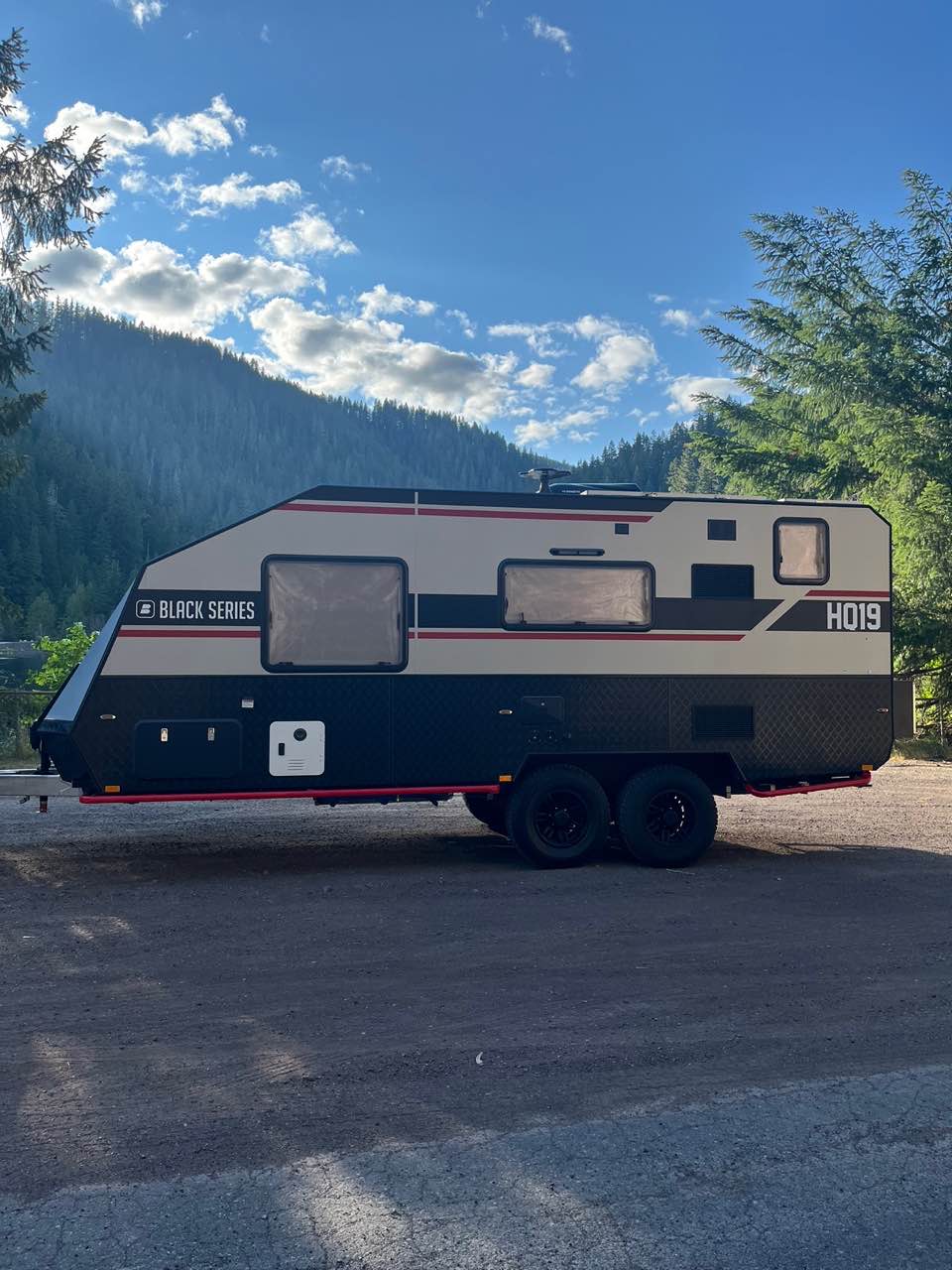
Understanding how dealers arrive at their numbers removes the mystery from the process. Here's the simplified formula most dealerships use:
Base Value – (Repairs + Reconditioning) – Dealer Margin + Market Demand Adjustment = Estimated Trade-In Range
Let's break that down:
Let's say you have a 2021 travel trailer with a J.D. Power base value of $35,000:
Estimated Trade-In Offer: $30,300
This is why quotes vary significantly between dealers: each one weighs these factors differently based on their inventory needs and local market.
Not all factors carry equal weight. Here's what dealers scrutinize most closely:
Travel trailers typically retain value better than motorized units due to fewer mechanical components. Fifth wheels command premiums for interior space, while Class A motorhomes depreciate fastest due to engine and drivetrain complexity.
The average weight of camper units also matters more than you'd think. A 30 foot RV weight can exceed 8,000 lbs, limiting the pool of buyers who can actually tow it. Meanwhile, a 16 ft camper weight around 2,500 lbs appeals to half-ton truck owners: a much larger market.
RVs depreciate 10–20% in year one alone. By year five, expect 36–38% total depreciation from MSRP. However, well-maintained units from premium brands with aluminum construction buck this trend significantly.
Water damage, chassis rust, and slide-out failures tank values faster than anything else. A well-maintained 8-year-old trailer with solid bones often commands better value than a neglected 4-year-old unit with moisture intrusion.
Here's something most calculators miss: average travel trailer weights directly impact buyer demand. A 24 ft camper weight around 5,000 lbs hits the sweet spot for most tow vehicles. But a 30 ft camper weight pushing 9,000+ lbs requires heavy-duty trucks: shrinking your buyer pool and your trade-in value.
ZIP codes matter. Desert dwellers pay premiums for off-grid capable rigs, while coastal buyers prioritize corrosion resistance. Spring consistently delivers the strongest trade-in values as buyers prepare for summer adventures.

Best for: Establishing baseline value for dealer negotiations
Limitations: Doesn't account for hyper-local demand or specialized categories like overlanding rigs
Best for: Quick market-based estimates with real listing comparisons
Limitations: Better for retail estimates than actual trade-in offers; less standardized than J.D. Power
Pro Tip: Use both tools. J.D. Power gives you the dealer's starting point; RV Trader shows you what's actually selling in your area.
The honest answer: private sale almost always yields more money. The realistic answer: it rarely makes sense.
When trade-in wins: You want to upgrade your RV to something more capable, you value your time, and you'd rather put that energy into planning your next adventure instead of fielding lowball offers from strangers.
For deeper analysis, check out our guides on camper trade-ins, fifth wheel trade-ins, and Class A motorhome trade-ins.

Before requesting quotes, run through this list:
One often-overlooked factor: an 18 ft camper weight unit in excellent condition may actually trade higher than a larger rig in fair condition, simply because the buyer pool is larger.
Here's the real question: what are you trading toward?
Most RV owners trade in for a "newer version" of what they already have. Same limitations. Same crowded RV parks. Same paved-road-only adventures.
The smarter move? Trade for capability, not just newness.
Black Series owners trade up from:
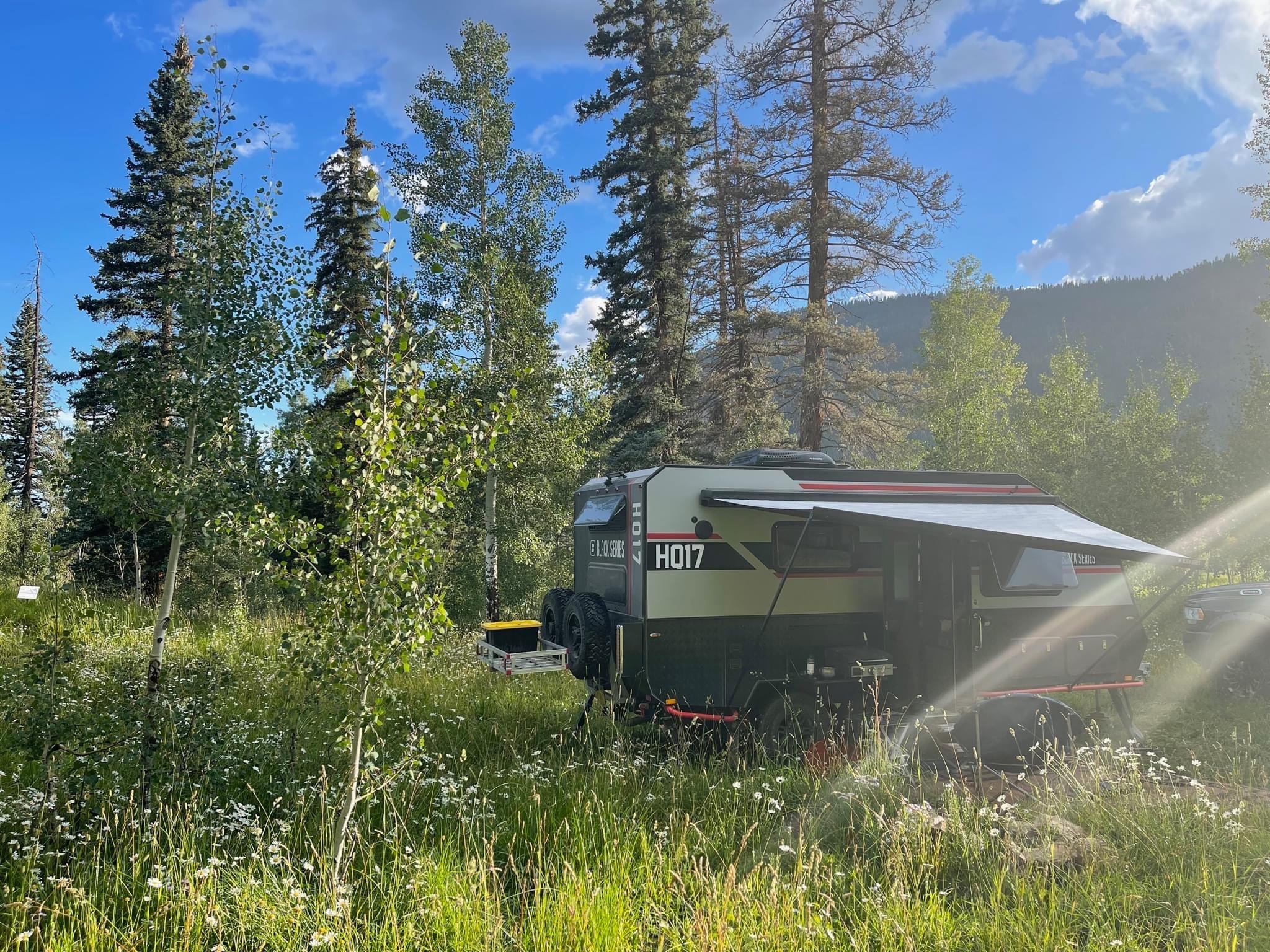
Models like the HQ21 represent what a trade-in should unlock: the ability to reach places your old rig couldn't dream of accessing.
Calculators provide estimates within 10–20% of actual offers. They're starting points, not guarantees. Physical inspection always determines the final number.
Dealers need margin for reconditioning, marketing, carrying costs, and profit. They're assuming risk you'd otherwise carry yourself.
Yes. If you have positive equity, it becomes your down payment. If you have negative equity (owe more than trade value), the difference typically rolls into your new loan.
Title (or lender payoff information), registration, maintenance records, and valid ID. Some dealers also request photos upfront.
Quality upgrades (solar, lithium batteries, suspension) can add value, but rarely dollar-for-dollar. They're more impactful for private sales where buyers specifically seek those features.
Most dealer trade-ins complete within 3–7 days once you accept an offer. Loan payoffs may extend this slightly.
Absolutely. Regional demand varies significantly. Off-grid capable rigs command premiums in the Southwest; lightweight towables sell faster in urban areas with storage restrictions.
Spring (March through May) consistently delivers the strongest values as buyers prepare for camping season.
Ready to see what your rig is worth toward a Black Series upgrade? Start your trade-in conversation today and discover what trading for capability (not just newness) actually looks like.
Explore the Black Series lineup
Ready for the trail? See the Yellow Stone vs Rocky Mountain editions — and see which build is worth it.
Related reading:
Keep going: Compare all eight models · Black Series guides hub