
Your cart (0)
Your cart is empty
Tax included and shipping calculated at checkout
Your cart is empty
Tax included and shipping calculated at checkout

RV gray water tank smell is usually caused by food residue, soap buildup, and bacterial growth. Proper cleaning, ventilation, and regular maintenance can eliminate odors and prevent them from returning.
Nothing ruins a peaceful RV camping experience quite like foul odors wafting from your gray water tank. Whether you're dealing with a rotten egg smell, sewage-like odors, or something that just doesn't belong in your mobile home, understanding the root causes and solutions will help you get back to enjoying your adventures.
Your RV's gray water tank collects wastewater from sinks, showers, and washing machines, basically any water that's been used but doesn't contain human waste. This distinguishes it from your black water tank, which handles toilet waste and requires different treatment methods.
Gray water might seem relatively harmless, but it creates the perfect environment for bacterial growth. Food particles from dishwashing, soap residue from showers, grease, hair, and body oils all accumulate in your gray tank over time. Unlike fresh water systems, gray water sits stagnant, creating ideal conditions for anaerobic bacteria to thrive and produce those unmistakable foul odors.
The gray water system plays a crucial role in your RV's overall functionality. When properly maintained, it allows you to extend your off-grid camping time and manage resources efficiently. However, when problems arise, the entire living experience becomes unpleasant.
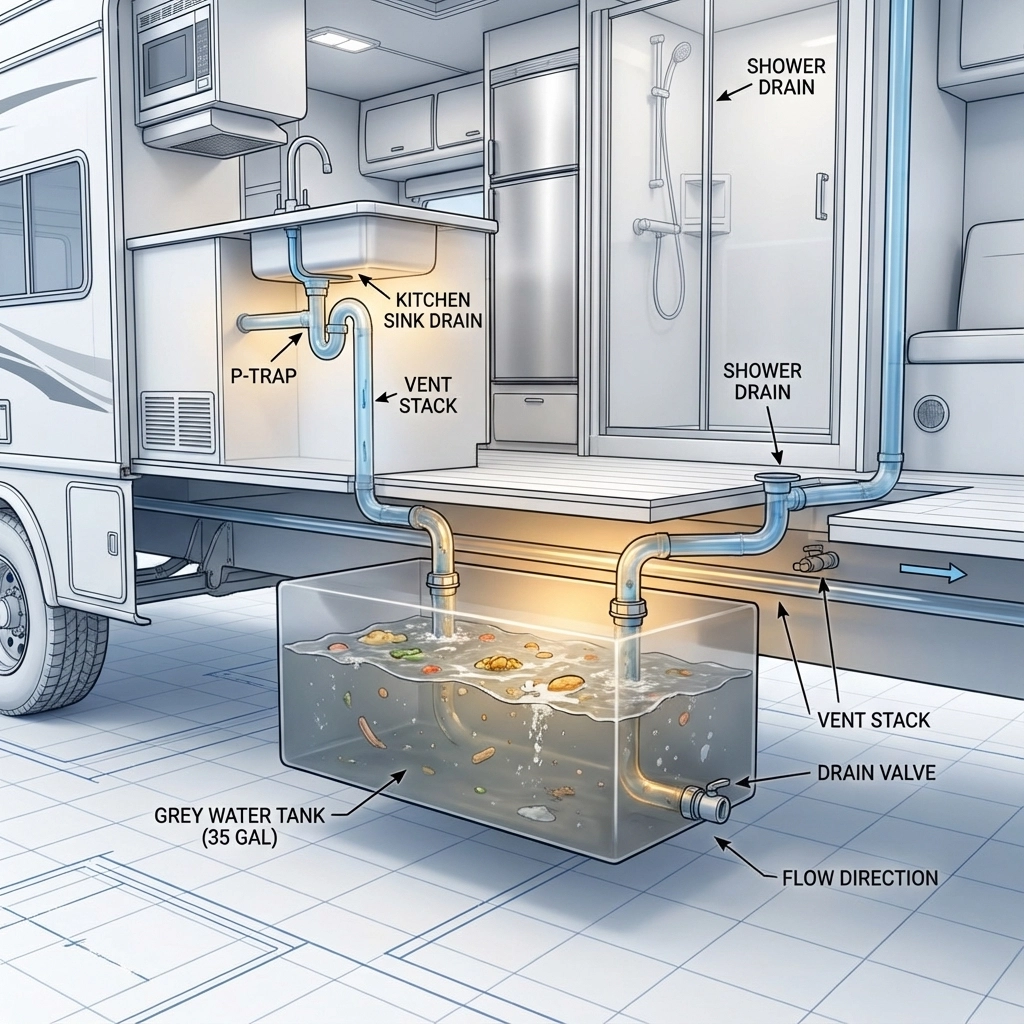
Understanding what causes RV gray water tank odor helps you address the problem at its source rather than just masking symptoms.
Bacterial Imbalance
The primary culprit behind holding tank odors is an imbalance between aerobic and anaerobic bacteria in your tank. When anaerobic bacteria dominate your tank's ecosystem, they break down sulfur compounds and produce hydrogen sulfide, that unmistakable rotten egg smell. These bacteria also generate methane-like odors as they metabolize waste, creating the sewage smell many RVers encounter.
Food Residue and Grease
Every time you wash dishes or cookware, tiny food particles and grease enter your gray tank. Over time, these particles coat the tank walls and decompose, creating a breeding ground for odor-producing bacteria. Cooking oils are particularly problematic because they solidify and trap other debris.
Soap and Detergent Buildup
While soaps and detergents help clean your dishes and body, their residues accumulate in your gray tank. Soap scum creates a film that traps other particles and provides nutrients for bacterial growth. Some soaps also contain ingredients that can disrupt the natural bacterial balance in your tank.
P-Trap Issues
Your RV's sinks and showers have P-traps, curved pipes that hold water to prevent sewer gases from entering your living space. When these traps dry out, odors can flow directly from your gray tank into your RV through the drains.
Ventilation Problems
Gray tanks need proper ventilation to function correctly. Blocked or malfunctioning air vents prevent fresh air circulation and trap odors inside the tank. When vents can't do their job, odors find alternative routes, usually through your sink and shower drains.
When you need to know how to get rid of RV gray tank smell, follow this systematic approach:
Step 1: Flush Your Water System
Start by running water through all your drains for several minutes. This removes any stagnant water and loose debris that might be contributing to odors. Pay special attention to drains that haven't been used recently.
Step 2: Empty and Rinse Your Gray Tank
Completely empty your gray tank, then add fresh water and empty it again. This initial rinse removes much of the accumulated waste and gives your cleaning products a clean slate to work with.
Step 3: Apply Bio-Enzymatic Treatment
Add a bio-enzymatic treatment specifically designed for gray water tanks. These treatments promote the growth of aerobic bacteria, which produce odorless carbon dioxide instead of smelly gases. Follow the manufacturer's instructions for dosage based on your tank size.
Step 4: Agitate and Circulate
If possible, drive your RV or use the tank's agitation system to circulate the treatment throughout the tank. This ensures the cleaning solution contacts all surfaces and breaks up stubborn buildup.
Step 5: Let It Work
Allow the treatment to sit in your tank for the recommended time, usually 4-12 hours. During this time, beneficial bacteria multiply and break down odor-causing compounds.
Step 6: Final Rinse and Refill
Empty the tank completely, rinse with fresh water, and add a small amount of fresh water to prevent the tank from sitting completely dry.
Keep these items on hand for effective gray tank maintenance:
Having these supplies readily available makes routine maintenance much easier and ensures you can address problems quickly when they arise.

Effective RV holding tank odor control requires a multi-faceted approach that addresses both immediate problems and long-term prevention.
Promote Beneficial Bacteria
Rather than trying to sterilize your tank completely, focus on encouraging the growth of aerobic bacteria. These beneficial microorganisms break down waste without producing foul-smelling byproducts. Bio-enzymatic treatments specifically designed for this purpose work continuously to maintain the proper bacterial balance.
Maintain Proper Ventilation
Ensure your gray tank's air vent remains clear and functional. A properly working vent allows odors to escape safely while preventing vacuum conditions that can cause problems with drainage. Regular inspection and cleaning of vent systems prevents many odor issues before they start.
Keep P-Traps Filled
Make sure water remains in your sink and shower P-traps. If you're storing your RV or haven't used certain drains recently, run water through them periodically to maintain the water seal that blocks sewer gases.
Use Appropriate Water Levels
Maintain adequate water in your gray tank to help dilute waste and support proper bacterial activity. Too little water concentrates waste and creates anaerobic conditions, while too much can cause overflow issues.
Avoid these common errors that can actually worsen your gray tank odor problems:
Using Household Bleach or Harsh Chemicals
While bleach might seem like a good disinfectant, it kills beneficial bacteria along with harmful ones. This disrupts the natural balance and often makes odor problems worse once the chlorine dissipates.
Ignoring the Vent System
Many RVers focus solely on the tank itself and forget about ventilation. A blocked or damaged vent can trap odors and prevent your tank from functioning properly, regardless of how well you clean it.
Infrequent Emptying
Letting waste sit too long in your gray tank creates ideal conditions for anaerobic bacteria growth. Empty your tank regularly, especially during extended camping trips.
Cleaning Only the Tank
Don't forget about the pipes, drains, and connections that lead to your gray tank. Buildup in these areas can continue to produce odors even after you've cleaned the tank thoroughly.
Prevention is always easier than treatment. These practices will help you avoid gray tank odor problems:
Scrape Dishes Thoroughly
Remove as much food waste as possible before washing dishes. Even small particles can accumulate over time and create odor problems.
Use Gray Tank-Safe Products
Choose soaps and detergents specifically designed for RV use. These products are formulated to work with your tank's bacterial ecosystem rather than against it.
Establish a Maintenance Schedule
Regular treatment with bio-enzymatic products prevents problems before they start. Most experts recommend monthly treatments, but adjust frequency based on your usage patterns and camping conditions.
Monitor Water Sources
When camping in remote areas, be aware that different water sources can affect your tank's bacterial balance. Well water, lake water, and municipal supplies all have different mineral contents and treatment chemicals that can impact your system.
Black Series RVs are designed for serious off-road adventures, which means they encounter conditions that can challenge even well-maintained systems. When you're camping in remote locations, accessing multiple water sources, and dealing with extreme temperature variations, proper gray tank maintenance becomes even more critical.
The rugged construction and advanced systems in Black Series trailers can handle tough conditions, but they still rely on proper maintenance to function optimally. Off-grid camping often means limited access to dump stations, making efficient gray tank management essential for extended adventures.
Black Series owners typically camp in environments where temperatures fluctuate dramatically between day and night. These temperature swings can accelerate bacterial activity and increase the likelihood of odor problems if proper maintenance isn't maintained.

Why does my RV gray water tank smell like sewage?
Gray tank sewage smells usually indicate an overgrowth of anaerobic bacteria, which produce hydrogen sulfide and methane gases. This happens when food waste, grease, and soap residue accumulate without proper treatment, creating ideal conditions for odor-producing microorganisms.
Is gray tank odor dangerous?
While unpleasant, gray tank odors are generally not dangerous to your health. However, they indicate bacterial imbalances that can affect your tank's function and potentially contaminate your fresh water system if left untreated.
Can I use vinegar or bleach in my gray tank?
Avoid both vinegar and bleach in your gray tank. Bleach kills beneficial bacteria and can damage seals, while vinegar's acidity can corrode metal components. Use products specifically designed for RV gray tanks instead.
How often should I clean my RV gray water tank?
Clean your gray tank monthly during active use, or whenever you notice odors developing. If you're camping frequently or in challenging conditions, you may need more frequent treatments.
What's the difference between gray tank and black tank smells?
Gray tank odors typically smell like rotten eggs or stagnant water due to soap and food residue breakdown. Black tank odors are more sewage-like due to human waste decomposition. Both require different treatment approaches specific to their waste types.
RV Gray Water Tank Smell: Causes and How to Eliminate Odors is the original article published on Black Series RV | Off-Road Travel Trailers, Toy Haulers & Camper Trailers | Off road RV | Off grid RV | Overland RV | Off road trailer | Off road travel trailer | Overland travel trailer.
Explore the Black Series lineup
Ready for the trail? See the Black Series HQ19 Luxury Off-Road Travel Trailer — built for long, off-grid expeditions.
Related reading:
Keep going: Black Series guides hub